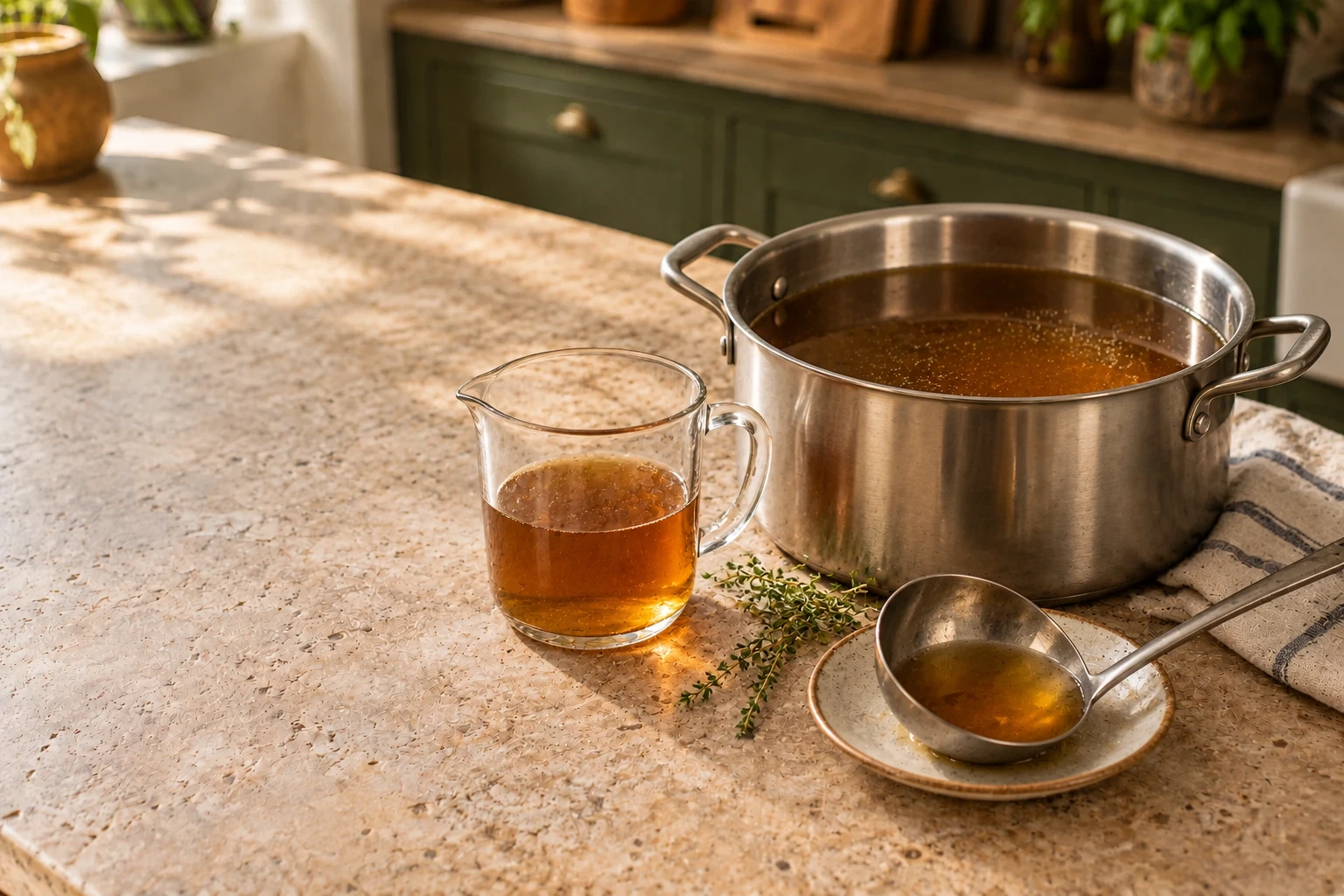
Homemade beef stock
Roasted beef or veal bones, vegetables and plenty of time produce a deep brown stock for soups, sauces and stews. Strain, reduce to suit its use and quickly chill what you want to save.
Jump to the recipe ↓AI-generated illustration.
Optional: keep the screen awake while following the recipe. Uses more battery.
Choose an approximate final quantity. The default view starts at 4 litres.
Ingredients now shown for 4 litres.
Cuisine: International
Method
Blanch the bones
Put bones in the pot and cover with cold blanching water, additional to the starting water in the ingredient list. Bring to the boil and boil for 5–10 minutes. Drain, rinse the bones and wash the pot.
Roast bones and vegetables
Heat the oven to 220 °C conventional. Put bones and roughly cut vegetables in a roasting dish. Roast for 30–40 minutes until well browned, without black burnt patches. Turn as needed.
Start the stockpot
Put bones and vegetables in the clean pot. Deglaze the roasting dish with some starting water and add the roasting juices. Add the remaining water to cover the bones, along with vinegar, bay leaves and peppercorns.
Simmer gently
Heat slowly and skim off foam collecting on the surface. Poach or barely simmer for 12–24 hours. Check regularly and top up with hot water as needed so the pot does not boil dry. Plan cooking for a time when you can supervise it.
Strain and assess strength
Lift out bones and vegetables and strain the stock. Reduce uncovered if you want a more concentrated stock. Measure the final volume if useful. Salt only once the desired concentration is reached, or leave unsalted for later use.
Cool rapidly
If not using immediately, divide into smaller shallow containers or place a suitable container in an ice-water bath. Stir with a clean utensil. Reduce the temperature from 60 to 10 °C as quickly as possible, within two hours at the latest, then refrigerate. Do not leave a large pot on the worktop overnight.
Portion and store
Refrigerate cooled stock, preferably below 4 °C, and use soon or freeze in convenient portions. Label with the date and any reduction. Remove the fat layer once cold if desired.
Get to know the spices in this dish
About this version
Home-tested with excellent results. The original uses 2 kg bones and 4–5 litres starting water, yielding about 3 litres before further reduction. The quantity selector here means the desired approximate final volume in litres, not people. Yield depends on pan, lid and evaporation.
Good to know before you cook
Yield is a target, not a guarantee
Starting water is not the same as finished stock. Taste and concentration determine when to stop reducing. Dilute with water when using if the stock is highly concentrated.
Vinegar without grand promises
A small amount of vinegar is part of the earlier recipe. It does not guarantee a particular nutrient content or setting.
Use in Sapidus stews
The stock suits Bœuf Sans Vin and Norwegian beef stew. Start cautiously with salt and other salty sauces when using concentrated stock.
Sources and further reading
Sources were compiled with AI assistance.