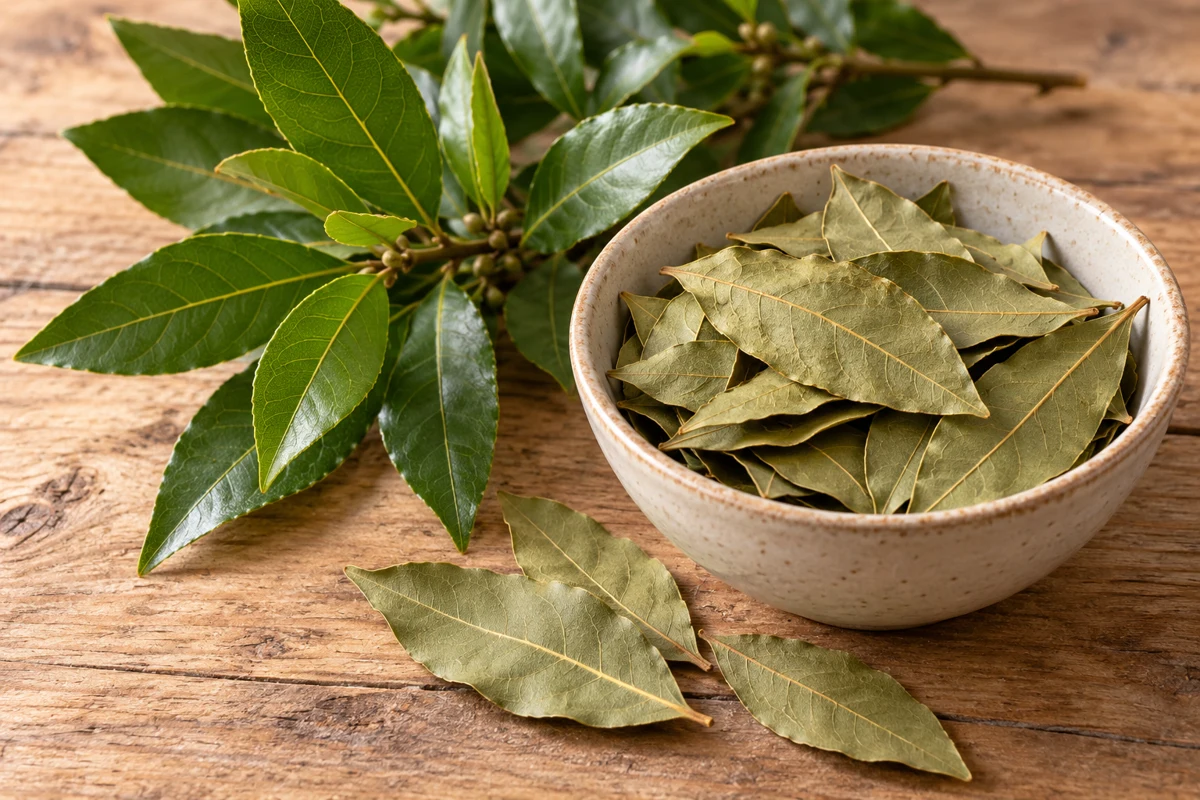
Bay leaves
Aromatic and herbal, with a dry, slightly bitter note. The flavour is clearer after infusing.
AI-generated illustration.
1043
What is it?
Culinary bay leaves usually come from Laurus nobilis. Use leaves sold or reliably identified as food.
«Aromatic and herbal, with a dry, slightly bitter note. The flavour is clearer after infusing.»
Background
Dried leaves are easy to keep in the cupboard for stews and stock. Count them before they go into the pan.
Flavour profile
Aromatic and herbal, with a dry, slightly bitter note. The flavour is clearer after infusing.
Pairs well with
Stock, meat stews, ragù, beans and soups.
Let a whole leaf infuse in the liquid and remove before serving. Adjust the quantity to the pot size.
Did you know?
One leaf need not taste strong immediately. It is an infusing spice that needs time in liquid.
Common mistakes
Serving the stiff leaves in the sauce, or adding many because one spoonful does not taste distinctive immediately.
Know the difference
Bay laurel and cherry laurel are not the same plant. A leaf resembling a culinary herb is not enough.
A little spice knowledge
Keep the leaf whole when it needs to be removed. Avoid crumbling it over a finished portion.
Works well with
Thyme, pepper, onion and allspice.
Sapidus’ favourite partners
Put a leaf in the ragù while it simmers, and remember to remove it when the sauce is ready.
Never combine with?
Bay should support the stew. Many leaves can give a dry, bitter direction that does not suit every soup.
Storage
Keep fresh leaves or stems chilled and use while in good condition. Store dried herbs tightly closed, dark and dry, away from cooker steam. Also follow the packaging advice.
Try it yourself
Let a leaf infuse in a little hot, mild stock. Compare before and after without using an entire pot. This suggestion is not presented as a test carried out by Sapidus.
1 claims linked to sources.
Source research was AI-assisted. Explore the background and follow the links to the sources.