The right cut. The right heat.
A good steak starts before the pan is hot. Find the cut that suits your meal, with Norwegian and English names, differences between countries, and guidance for quick cooking and slow stews.
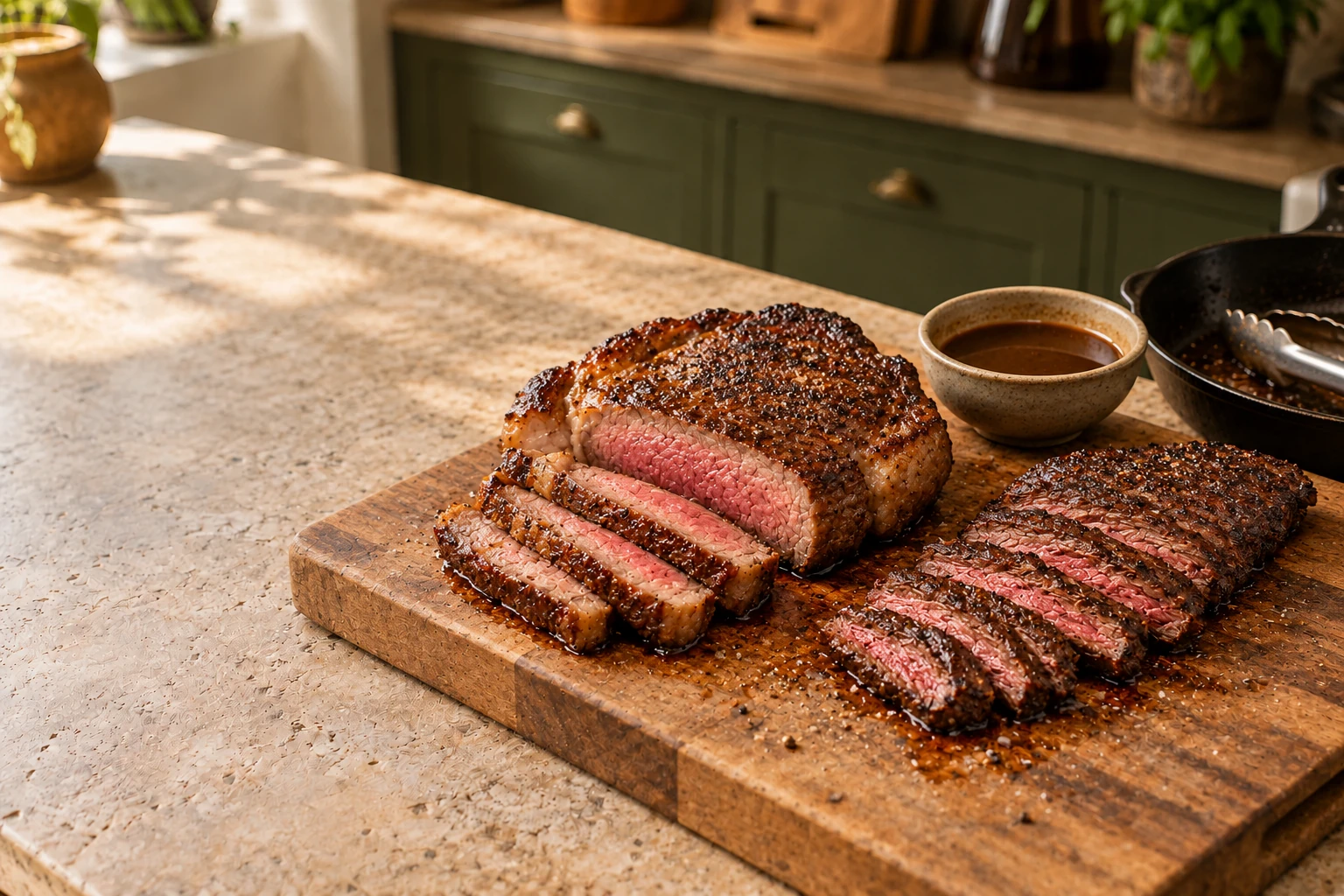
AI-generated illustration.
Steak tonight or stew on Sunday?
Tenderloin, striploin and ribeye need less cooking than chuck, brisket and shank. The difference comes from the muscles, connective tissue and trimming. Price alone tells you little about what will work best in a stew.
Quick steak: ribeye, striploin or tenderloin. Whole roast: top sirloin, coulotte or tri-tip. Slow stew: chuck, shoulder, brisket, short ribs or oxtail. See the table for more options and important exceptions.
Ask the butcher: Has this been aged for steak? Has the central sinew been removed? Which way does the grain run? These questions are often more useful than asking which cut is ‘best’.
Find your cut.
The overview covers the main Norwegian primal cuts and several common international steak cuts. Some rows describe portion cuts or trade names from the same muscle. Where names do not match exactly, this is stated explicitly.
Showing 30 of 30 cuts of beef.
| Norwegian name / location | English name | Uses and cooking methods | Worth knowing |
|---|---|---|---|
| Denver steakUnder the shoulder blade, forequarter | Denver steak / chuck under blade center steak | Quick cooking Marbled steak for the pan or grill. | A specifically trimmed cut from the under blade, not ordinary shoulder stewing meat. Slice across the grain. |
| Bavette / flap steakLower sirloin area, abdomen | Sirloin bavette / bottom sirloin flap | Quick cooking Grill whole or cut into strips for dishes such as fajitas. | Bavette means different things in different countries. Here we mean American sirloin flap; ask whether that or flank is being sold. |
| Oksekjake / oksekinnCheek | Beef cheek / ox cheek | Slow cooking Braise in stock until completely tender. | A working muscle that needs time. Remove thick membranes and sinews before browning; do not cook it like a quick steak. |
| IndrefiletInside the back | Tenderloin / fillet (UK) | Quick cooking · Whole roast Whole-roasted fillet, medallions and tournedos. | Very tender and lean. Filet mignon and tournedos are portion cuts from the tenderloin, not separate primal cuts. |
| YtrefiletBack | Striploin / strip steak (US); sirloin (UK) | Quick cooking · Whole roast Sliced steak or a whole roast with its fat cap. | New York strip is a common American name for a steak from the striploin. British sirloin is not the same as American top sirloin. |
| EntrecôteForepart of the back | Ribeye / rib eye | Quick cooking · Whole roast Marbled steak; whole ribeye as a roast. | More fat and a stronger beef flavour than tenderloin. Give the fat and surface time to brown. |
| Côte de bœuf / tomahawkRib and back | Bone-in ribeye / tomahawk steak | Quick cooking · Whole roast Thick bone-in ribeye. Brown first and finish over gentler heat. | These are different presentations of bone-in ribeye; a tomahawk has a long, cleanly trimmed rib bone. |
| T-bone / porterhouseBone-in loin | T-bone / porterhouse | Quick cooking Thick steak containing both striploin and tenderloin. | In American cutting specifications, porterhouse has a larger tenderloin section. The two muscles may reach the desired doneness at different times. |
| MørbradHip | Top sirloin butt (US); rump, partly (UK) | Quick cooking · Whole roast Steak, whole roasting, strips and skewers. | Several muscles and slightly more structure than fillet. British rump and Norwegian mørbrad overlap without being entirely identical cuts. |
| Culotte / picanhaCap over the top sirloin | Top sirloin cap / coulotte | Quick cooking · Whole roast Roast whole with its fat cap or slice into grilling steaks. | Picanha refers to this area with its fat cap retained. It is not tri-tip. Avoid scorching the fat over open flames. |
| Tri-tip / cuvetteLower sirloin area | Tri-tip / bottom sirloin triangle | Quick cooking · Whole roast Small triangular roast, grilled whole or cut into steaks. | The grain can change direction. Divide the cut if necessary before slicing across it. Names and boundaries vary between suppliers. |
| Flank steak / slagsidebiffRear abdomen and flank | Flank steak | Quick cooking Cook whole over high heat, then slice thinly. | Long-grained and relatively lean. Slice across the grain; do not confuse it with skirt or hanger steak. |
| Skirt steakDiaphragm and abdominal wall | Inside skirt / outside skirt | Quick cooking · Slow cooking Usually quick-cooked and thinly sliced; can also be braised in a suitable recipe. | Inside and outside skirt are different cuts. In Sapidus Sans Vin, the meat is braised separately and added for the final 15 minutes. Follow tenderness, not just the clock. |
| Nyretapp / ongletAttachment of the diaphragm | Hanger steak / hanging tender | Quick cooking Full-flavoured steak, split and trimmed before cooking. | Remove the tough central sinew. Hanger steak is not skirt steak or offal, despite the potentially misleading Norwegian name. |
| Flat iron steakOutside of the shoulder blade | Flat iron / top blade steak, trimmed | Quick cooking Steak from the trimmed top blade muscle. | American flat iron has its tough central sinew removed. Norwegian products may retain the sinew; check the trimming before cooking. |
| Flat iron filetInside of the shoulder blade | Norwegian trade name; ask for the exact muscle | Quick cooking · Whole roast Small, tender cut that can be browned and finished gently. | Matprat distinguishes this from flat iron steak on the outside of the shoulder blade. There is no reliable universal one-to-one English translation. |
| HøyryggfiletChuck, close to the ribeye | Chuck eye roll / chuck eye steak | Quick cooking · Whole roast · Slow cooking A selected tender section can be used for steak; other parts need longer cooking. | This does not make all chuck suitable for quick cooking. Ask where the cut comes from and whether it has been aged and trimmed for steak. |
| FlatbiffInside of the hind leg | Topside (UK) / inside round (US) | Quick cooking · Whole roast Roast beef, roasting and strips; well-aged sections for steak. | Lean. Tenderness depends on ageing, muscle and trimming. Do not treat it like marbled ribeye. |
| AdduktorPart of the topside / inside round | Adductor muscle, part of topside / inside round | Quick cooking · Whole roast A trimmed, well-aged piece can be used for small steaks. | A muscle name rather than a fixed international retail term. Ask the butcher about ageing and suitable uses. |
| DragebiffAlongside the tenderloin | Tenderloin chain / side muscle | Quick cooking Trimmed small pieces for strips, the pan and skewers. | Thoroughly remove sinews and membranes. Irregular in shape but full of flavour; avoid overcooking small pieces. |
| HøyryggNeck and forepart of the back | Chuck / chuck roll | Slow cooking Stews, pulled beef and braising. | Connective tissue needs time with moist heat. Chuck is the main meat in Sapidus Bœuf Bourguignon Sans Vin. |
| BogForequarter | Shoulder / chuck shoulder | Slow cooking Stews, simmered meat and braised roasts. | The shoulder contains several muscles. Specifically trimmed steak cuts must be distinguished from ordinary shoulder meat. |
| BogplommeShoulder | Shoulder clod heart / shoulder roast, approximately | Whole roast · Slow cooking Braised roast, stew or gently cooked roast according to the cut’s tenderness. | Leaner than chuck. Norwegian and American cutting specifications do not necessarily follow the same muscle boundaries. |
| Rundstek / rundbiffFront of the hind leg | Knuckle / sirloin tip (US) | Whole roast · Slow cooking Roasting, braising and stews; trimmed parts can be used in strips. | The Norwegian name rundbiff does not mean the entire cut is a tender frying steak. It is not American top sirloin. |
| BankekjøttOutside of the hind leg | Outside round / bottom round flat | Slow cooking Braised sliced beef, stews and braising in slices. | Lean and firm. Sauce alone will not tenderise a briefly fried cut; give the connective tissue sufficient time. |
| LårtungeRear part of the hind leg | Eye of round | Whole roast · Slow cooking Thin slices of a gently cooked roast, or braising. | Very lean with a pronounced grain. Not a substitute for tenderloin even if the shape looks similar. |
| Bryst / brisketBreast | Brisket, flat and point | Slow cooking Braising, simmering and slow barbecue. | Brisket can include flat and point with different fat levels. Norwegian breast cuts may be cut and trimmed differently. |
| Bibringe / short ribsLower rib area | Short ribs / plate ribs, depending on the cut | Slow cooking Braising and slow barbecue on the bone. | The English name depends on the rib section and cutting direction. Norwegian bibringe and every form of short ribs are not identical retail products. |
| For- og bakknoke / skankLower leg | Shank (US) / shin (UK) | Slow cooking Stews, stock and slices braised like osso buco. | Plenty of connective tissue. Needs long, gentle cooking; the goal is tenderness, not a pink steak centre. |
| OksehaleTail | Oxtail | Slow cooking Oxtail soup, stock and braised meat. | Lots of bone and connective tissue, less boneless meat per kilo. Cook until the meat releases easily from the bone. |
The table scrolls sideways on small screens. These names are practical shopping aids; the boundaries and trimming of cuts may vary between countries and butchers.
Brown the surface. Let the thermometer help.
- Dry the meat thoroughly. A wet surface must lose its water before it can brown. Salt just before cooking or well in advance, and pat dry if needed.
- Use a properly hot pan and a little oil. Cook in batches. Butter can be added towards the end, when the temperature is more controlled.
- Match the heat to the thickness. Thin skirt and flank cuts need less time than thick bone-in ribeye. Thick steaks can be browned first and finished over gentler heat.
- Measure in the centre of the thickest part. Avoid bones and large fat pockets. Do not treat a fixed number of minutes as a guarantee.
- Rest briefly and slice across the grain. This is particularly important for skirt, flank and tri-tip. Turn the cut before slicing if necessary, so you can see the direction of the fibres.
For whole, intact steaks, approximate cooking temperatures often used are 55 °C for rare, 60 °C for medium and 70 °C for well done. These describe doneness. The temperature can continue rising after the meat leaves the heat, especially in large cuts. All surfaces must be thoroughly cooked; the same advice about a pink centre does not apply to minced or mechanically tenderised meat.
A dry steak need not have been ‘bad meat’. It may have been sliced with the grain, cooked too long, or made from a cut better suited to braising.
Tough stewing meat often needs more time.
Chuck, brisket and shank need gentle heat and time for their connective tissue to soften. Brown in batches, deglaze the pan and simmer gently. The stock need not cover everything under a tight lid, but check the liquid regularly and add water or stock as needed.
Test with a fork. The meat should yield without much resistance. A particular core temperature or three hours on the clock alone will not tell you whether it is ready. Large pieces and different muscles can need different times.
The chuck gets a long cook in the main pot. Skirt steak is browned and braised separately until tender, then joins the rest for the final 15 minutes. Start the separate preparation while the main stew is simmering. This is our method for this dish, not a rule that all skirt steak should be slow-cooked.
Use the stock guide when choosing your liquid, and the mushroom guide when browning mushrooms before adding them to the stew.
Sources and further reading
Source research is AI-assisted. Kitchen examples, proposed tests and troubleshooting are Sapidus’ practical applications of the source material.
- Matprat – Norwegian beef cutting guide ↗
- Matprat – Norwegian, British and American meat glossary ↗
- Matprat – skirt steak ↗
- Matprat – hanger steak ↗
- Matprat – flat iron steak ↗
- Matprat – flat iron filet ↗
- Beef. It’s What’s For Dinner – American flat iron ↗
- Beef. It’s What’s For Dinner – coulotte / picanha ↗
- Beef. It’s What’s For Dinner – porterhouse ↗
- Beef. It’s What’s For Dinner – Denver steak ↗
- Beef. It’s What’s For Dinner – sirloin bavette / flap ↗
- Magnus Andersson – braised beef cheek ↗
- AHDB – British striploin / sirloin ↗
- Matprat – frying and simmering tips for beef ↗