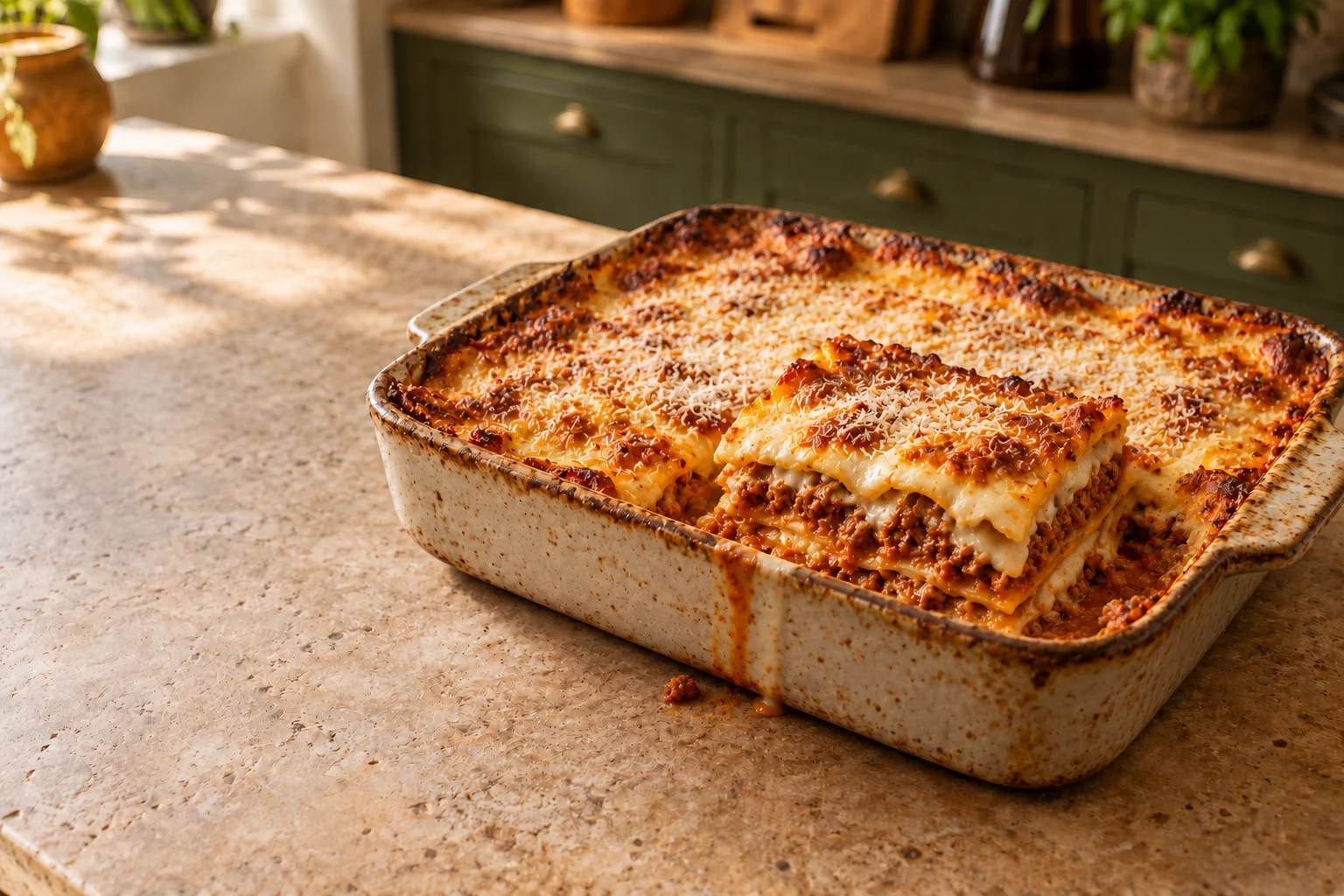
Lasagne alla Bari
Slow-cooked ragù, plenty of béchamel and closely fitted pasta layers. The name recalls a good lasagne in Bari; this is our Bolognese-influenced interpretation, not a claim to a separate regional classic.
Jump to the recipe ↓AI-generated illustration.
Optional: keep the screen awake while following the recipe. Uses more battery.
All recipes start at 4 people.
Ingredients now shown for 4 people.
Cuisine: Italian-inspired
Estimated timing: about 25 min preparation · about 170 min cooking · about 30 min resting. These estimates describe the basic method and are not measured kitchen timings. Follow the method and any time ranges above.
Method
Give the vegetables time
Heat olive oil in a wide casserole. Cook onion, carrot and celery over medium-low heat for 10–15 minutes. They should become soft and sweet without a dark crust. Set aside while browning the meat.
Brown the meat in batches
Increase the heat and brown beef and pork in two–three batches. Let the meat colour before breaking it into small pieces. A crowded casserole collects liquid and browns less effectively. Return all meat and vegetables to the casserole.
Reduce the wine
Stir in tomato purée and cook for a couple of minutes. Pour in red wine and scrape up the browned flavour from the bottom. Let the wine reduce almost completely before adding tomatoes. This gives a milder wine character in the sauce.
Simmer the ragù
Crush tomatoes and add with their juice, the smaller stock quantity and the bay leaf. Simmer gently for 1½–2 hours with the lid ajar. Stir occasionally and add a little stock or water if it becomes dry. Add the milk to the ragù for the final half hour. Season with salt and pepper and remove the bay leaf. The ragù should be juicy and easy to spread, not a dry mass of meat.
Make béchamel
Melt the béchamel butter in a saucepan. Stir in flour and cook gently for about 2 minutes without browning. Gradually whisk in milk, starting with the smaller amount. Simmer, stirring, for 5–8 minutes and season with nutmeg, salt and pepper. Use the remaining milk if too firm: it should pour and spread rather than sit like dough.
Build close, juicy layers
Heat the oven to 180 °C conventional and butter the dish. Spread a thin layer of ragù on the bottom. Continue with pasta, ragù, béchamel and a little Parmesan. Repeat for about 4–5 pasta layers, depending on the dish. Cover the entire surface with pasta, cutting pieces to fit and overlapping joins by only 5–10 mm. Stagger joins between layers. All sheets must touch sauce; reserve plenty of béchamel and Parmesan for the top.
Cover first, brown at the end
Cover with foil without pressing it into the sauce. Bake in the middle of the oven, covered for the first 20 minutes. Remove foil and bake for about another 20–30 minutes until golden and a thin knife passes easily through the pasta in the centre. Also follow the pasta packet. If more time is needed, cover again when the top has enough colour.
Let the lasagne settle
Rest the dish for about 30 minutes before cutting. The sauce distributes better and portions hold their shape. Serve with a simple green salad if desired.
Get to know the spices in this dish
About this version
Revised kitchen version. The recipe has been adjusted for a juicier result after the first test; this new version has not yet been fully tested.
Good to know before you cook
Juicy ragù matters more than extra cheese
Dry pasta sheets need liquid. If the ragù sits in a firm heap on the spoon, add a little warm stock or water before assembling. It should spread readily. Browning and slow cooking provide the meat flavour; it need not be cooked dry.
Make the béchamel last through every layer
Plan its distribution before starting and keep a generous amount for the top. Use the ingredient quantities for the chosen serving count. If it thickens while standing, whisk in a small splash of milk until easily spreadable again.
The dish is part of the recipe
A large roasting tin spreads the same sauce too thinly. Use a deep, medium-sized dish and stop before completely full. Four well-covered layers are better than six dry ones. You do not need to use all the pasta sheets.
Keep the flavour simple
In this version, meat, soffritto, tomato, milk and Parmesan do the work. It contains no garlic, oregano, basil, chilli or added sugar. We do not use mozzarella between the layers either.