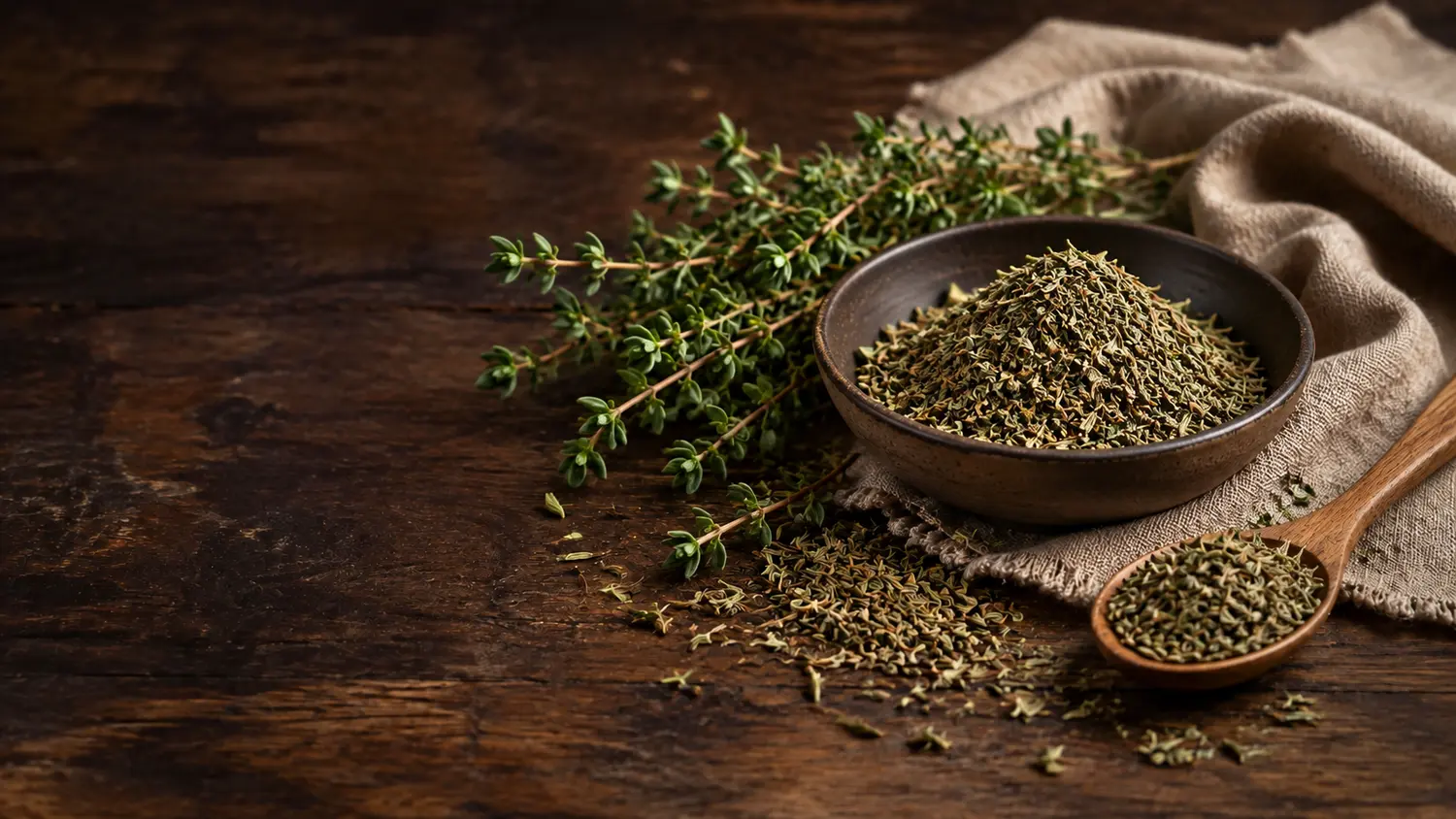
AI-generated illustration.
1057
What is it?
Dried thyme is made from leaves and flowers of plants in the Thymus genus. The spice can be sold whole, rubbed or crushed, and finely ground. Norwegian cupboards most commonly contain the rubbed version: small leaves separated from their stems and ready for the pot.
«Small leaves, big impact in the pot.»
The story
Common thyme, Thymus vulgaris, is native to southwestern Europe and southeastern Italy. It is a small, woody subshrub with leaves only a few millimetres long. Modest dimensions for an herb that has left a clear flavour throughout Mediterranean cooking.
Flavour profile
Thyme tastes green, dry and earthy, with a warm, gently peppery edge. Some types lean towards citrus, others are more assertive and almost resinous. Thymol, carvacrol and linalool are among the contributing aroma compounds, and their proportions vary with variety and growing location.
Pairs well with
Potatoes, mushrooms, tomatoes, beans, lentils, chicken, lamb, beef, soups, stock and slow-cooked stews. Thyme is especially good when a dish has time for flavours to come together, but a small pinch also makes a quick pan sauce feel more complete.
Rub dried thyme lightly between your fingers before adding it. This releases aroma and lets you check whether the jar still has anything to say. Add it early to slow-cooked dishes. Whole fresh sprigs can simmer and be removed with the bay leaf.
Did you know?
Dried thyme is not necessarily just one species. Codex allows suitable wild species, varieties and hybrids throughout the Thymus genus. Two bags can consequently smell surprisingly different without either being wrong.
Common mistakes
The common mistake is using dried thyme as green decorative confetti. It needs moisture, fat or a little time to unfold. Another is leaving coarse, woody stems on the plate. A sprig is welcome in the pot, but need not be served.
Know the difference
Thyme and oregano belong to the same plant family but are different herbs: thyme belongs to Thymus and oregano to Origanum. Dried, they may look similar in the jar, but oregano is generally rounder and more direct, while thyme is drier, tighter and woodier in character.
Fun facts
Common thyme leaves are only about 3–8 millimetres long. Their aroma is nevertheless clear enough for a small pinch to accompany a stew for hours. This is the spice cupboard’s quiet person whom everyone hears when he finally speaks.
Combines well with
Garlic, black pepper, bay leaves, rosemary, parsley, paprika, oregano, lemon and mustard. Thyme ties herbs and spices together, but preferably give it two or three good teammates rather than the entire bench.
Sapidus best friends
Potato welcomes its warm herbal flavour, mushrooms answer with earthiness, and butter or olive oil carries the aroma onwards. Together they give thyme home ground without requiring a French or Italian name for the dish.
What should you avoid?
Thyme has no absolute ban list. Be cautious with very delicate fish, mild desserts and dishes where fresh, light herbs should stand alone. Too much dried thyme can give food a dusty, almost medicinal edge. The problem is usually quantity rather than company.
Storage
Store dried thyme airtight, dark and dry, not on a wooden shelf above a hot, steaming cooker. Drying methods and temperatures can change both volatile-oil yield and sensory profile. Thyme belongs in the pot rather than simmering away in its jar.
6 claims linked to sources.
Source research was AI-assisted. Explore the background and follow the links to the sources.