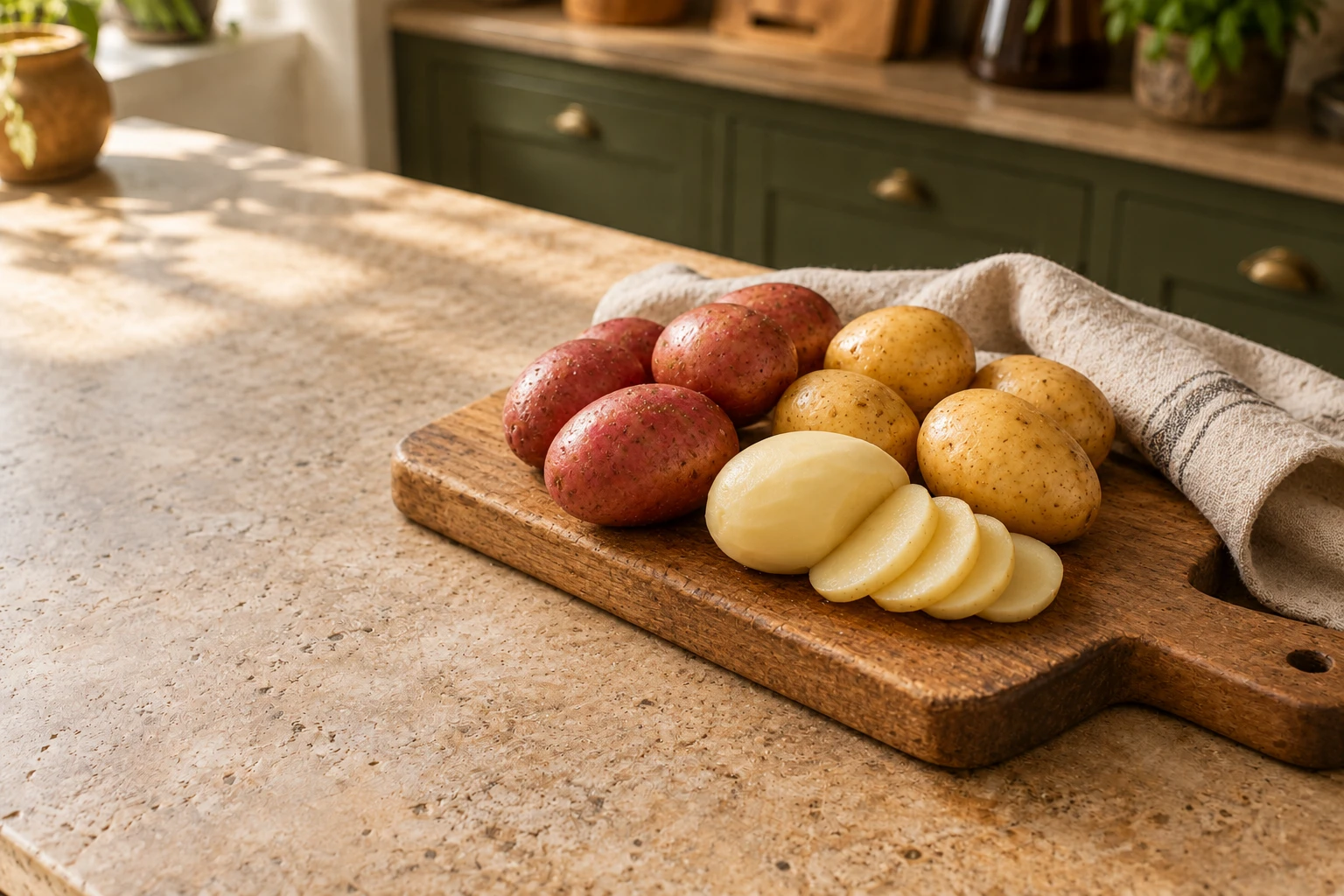
Choose the right potato.
A good gratin begins in the shop. Choose potatoes according to how you want them to behave in the dish.
AI-generated illustration.
Eight good ways with potatoes.
From simple boiling to crisp roast potatoes and soft mash, including an extra-crisp version with baking soda, parboiling and roasting. The recipes offer serving controls, specific timings and tips for success.
- Roast potato wedges with crisp edges
Golden potato wedges with soft centres, olive oil and a gentle touch of rosemary or thyme. Space on the tray and dry potatoes do more for the crust than large amounts of seasoning.
- Extra-crisp roast potatoes with bicarbonate of soda
Parboil potatoes with a little bicarbonate of soda, steam-dry them and shake to roughen their surfaces. In the oven, the outer layer becomes a golden crust around a soft centre.
- Homemade mashed potatoes
Soft, fluffy mashed potatoes with warm milk and a little butter. Use floury potatoes and mash by hand for a good texture without turning the mash gluey.
- Boiled potatoes – tender without falling apart
A good boiled potato is tender all the way through and holds its shape on the plate. Choose similar sizes, use gentle heat and let the potatoes steam-dry before serving.
- Baked potato with crisp skin
A whole potato with crisp skin and a fluffy centre. Bake without foil and open it as soon as it is ready so the steam can escape.
- Crispy smashed potatoes
Small potatoes are boiled until tender, pressed flat and baked until golden. The uneven edges develop a good crust while the middle stays soft.
- Pan-fried leftover potatoes
Yesterday’s boiled potatoes become golden and crisp in a hot pan. Leave them undisturbed long enough to develop a crust before turning.
- Creamy potato gratin
Thin slices, creamy sauce and golden cheese on top. Asterix potatoes become tender while the slices hold together. Sweating the onion first makes a noticeable difference.
Should it hold its shape or give way?
Waxy potatoes hold together. Floury potatoes have more dry matter and starch and fall apart more easily. Moderately floury varieties sit between them. Skin colour alone does not tell you which group a potato belongs to. Background: MatPrat ↗
| What you are making | A good starting point | Why |
|---|---|---|
| Potato salad and stews with whole pieces | Waxy | The pieces withstand turning and hold their shape. |
| Mashed potatoes | Floury | The potato breaks down readily and is easy to mash. |
| Creamy potato gratin with distinct layers | Waxy, such as Asterix or Beate | The slices can become tender without the whole dish turning to mash. |
| A softer, more cohesive gratin | Moderately floury or floury | A practical choice when you want less distinct slices. Turn gently. |
| Roasted wedges | Both types can work | Waxy potatoes give a firmer bite; floury potatoes tend to give a fluffier interior. |
The table is our practical application of the varieties’ characteristics. There is more than one good way to make the same dish.
Six varieties you may encounter.
Read both the variety name and usage advice on the pack. Growing conditions, maturity and storage can affect how a particular bag behaves. A simple test helps: boil a small piece and see whether it holds its shape or crumbles under light pressure.
| Variety | Characteristics | In the kitchen |
|---|---|---|
| Asterix | Versatile, usually waxy | Our first choice for creamy potato gratin with distinct slices. Also good for boiling and roasting. |
| Beate | Waxy and versatile | A good alternative for gratin and dishes where the pieces should hold their shape. |
| Solist | Early variety, waxy and low in dry matter | Good boiled or in salad. Can be used for gratin, but we tend to choose Asterix when aiming for a full-bodied sauce. |
| Folva | Waxy and versatile | An alternative for gratin, potato salad and roasted wedges. |
| Mandelpotet | Floury, with high dry matter content | Good for mash and gentle boiling. Can give a softer gratin, but the slices are more liable to break. |
| Kerrs Pink | Floury | A good choice for mash. In gratin, handle the slices carefully and expect a less firm result. |
Variety characteristics: Asterix, Beate, Solist and Mandelpotet at FRUKT.no; Folva and Kerrs Pink in MatPrat’s potato overview. The ranking for gratin is our assessment.
The potato matters. Technique does the rest.
We use Asterix in the recipe because we want tender, distinct slices in a creamy sauce. Beate is a good alternative. Solist is not a ‘wrong’ potato, but its low dry matter content means it would not be our first choice for this particular gratin. If you prefer a softer consistency, choosing a flourier variety is perfectly reasonable.
Cut 2–3 mm slices, evenly
Evenly thick slices finish cooking together. A few thick slices in the centre can make the gratin seem raw even with a golden top. Use the finger guard with a mandoline.
Wash first. Keep the starch afterwards.
Wash whole potatoes before peeling. Once sliced for gratin, they go straight into the cream mixture. Rinsing and soaking the slices removes surface starch that can help thicken the sauce.
Parboil gently in the liquid
This gives the potatoes a head start before the oven and lets you see whether the sauce is gaining body. Our recipe uses 7–9 minutes of gentle simmering. Turn carefully, particularly with floury potatoes.
Choose a dish suited to the quantity
A deep, tightly packed dish heats through more slowly than a shallower one. Do not fill a small dish to the brim; hot cream can bubble over. For a double recipe, two dishes are often easier than one very deep dish.
Test the potato, not just the colour
Insert a thin knife into the centre, all the way through the layers. If it meets a hard slice, the dish needs more time. Cover loosely with foil once the cheese has enough colour.
Allow 10–15 minutes to rest
Straight from the oven, the sauce often looks looser. A short rest produces a more cohesive portion and makes serving easier. Set the dish on the table while finishing the rest of dinner.
Find the cause before adding more.
Golden top, hard centre
Possible causes are thick slices, a deep dish or insufficient time. Cover loosely and keep baking. More cheese will not make the potato tender.
The sauce is thin
Let the gratin rest first. If it is still loose, liquid quantity, variety, rinsed slices or insufficient evaporation may explain it. Use the same dish and measurements next time so you can see which change actually helps.
The slices break up
This may come from a floury variety, vigorous stirring or long parboiling. It can taste good even when the layers disappear. Use firmer potatoes or a shorter parboil next time.
The dish dries out
A very wide dish or long baking time can cause substantial evaporation. Add a little warm milk or cream around the edge if needed while the potatoes are still baking, and cover. Begin with a few tablespoons.
A bag of potatoes needs a good home too.
Store potatoes in a dark, cool place and follow the pack’s storage advice. Light on a kitchen worktop is poor storage. Buy an amount you can use in time and inspect the potatoes before peeling. Storage advice: MatPrat ↗
Sources and further reading
Source research is AI-assisted. Practical suggestions and flavour assessments are Sapidus’ applications of the source material.