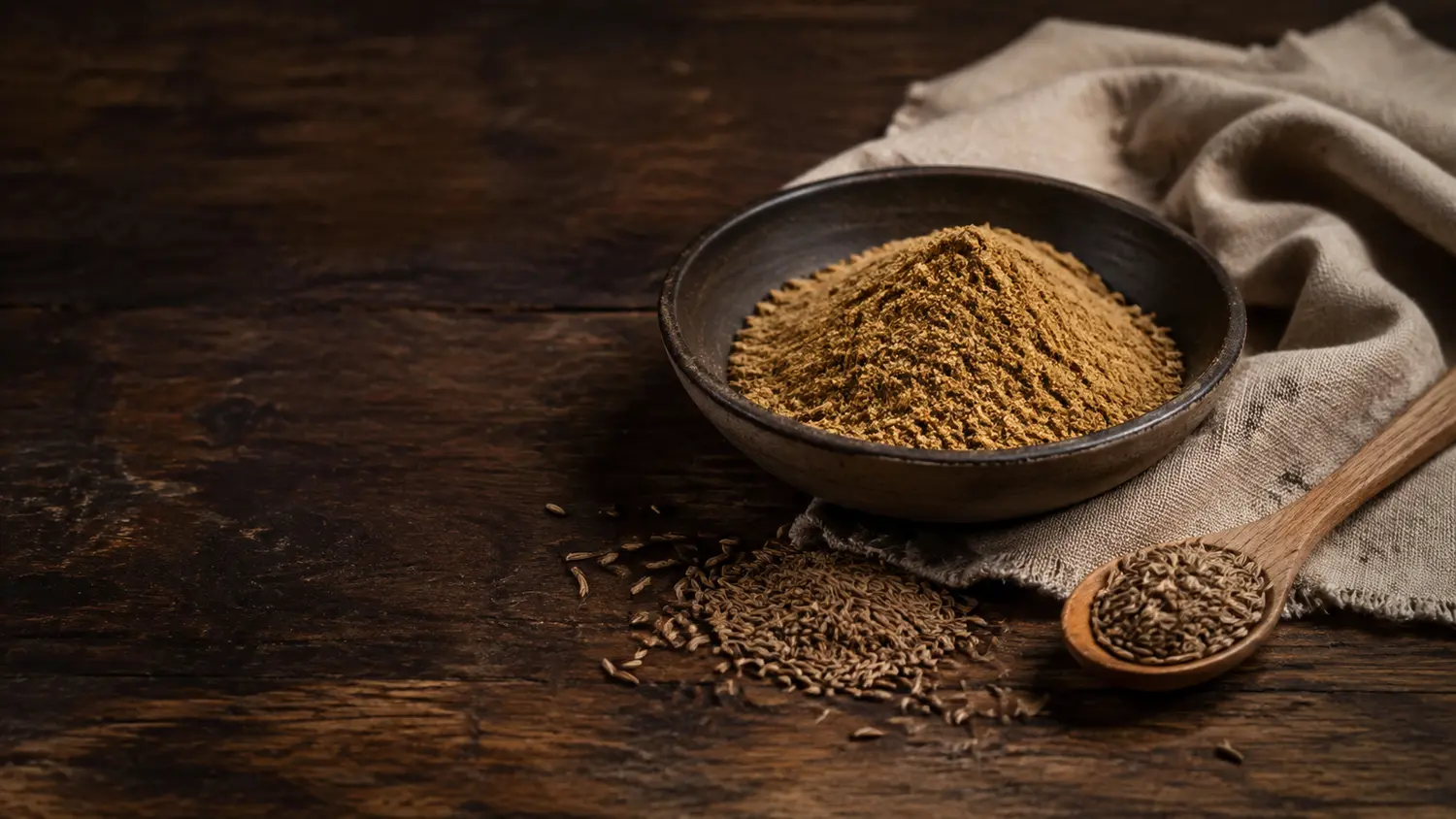
A little heat. More spice aroma.
Why are cumin and curry paste heated in oil before adding liquid? And when should you stop?
AI-generated illustration.
What do you notice?
Spice aroma rises quickly when ground cumin meets hot oil. With excessive heat, that pleasant aroma can just as quickly become harsh and burnt.
What happens in the food?
Many aromatic compounds in spices dissolve more readily in fat than in water. Fat can extract and distribute them, while heat releases more aroma molecules into the air. Spices also contain other compounds: not all flavour is fat-soluble, and a stronger aroma above the pot does not mean that longer frying always improves the food.
What should you do in the kitchen?
When making an onion base, soften the onion first. Lower the heat before stirring ground spices into the fat. Have the liquid ready and add it when the spices smell fragrant, before they darken. Around 15–30 seconds is a practical starting point for small amounts of ground spice in a warm onion base, not a rule for every pan.
Different spices need different treatment
Curry paste also contains moist ingredients and needs its own method; follow the curry recipe rather than the timing above. Paprika can scorch quickly. Fresh basil is often added late to retain its freshness. Use smell, colour and the recipe together. If the small spice base burns, start again before adding the rest.
Try it yourself.
Next time you make a mild tomato sauce, set aside two equal small portions. For one, briefly warm a little cumin in a teaspoon of oil before adding the sauce. For the other, stir the same amount of spice and oil directly into the sauce. Heat both for the same time and compare. This is a taste test, not a guarantee of which you will prefer.
This is a suggestion for your own exploration, not a test carried out by Sapidus.
Put it into practice.
Thai red curry →
See how curry paste is given time in the fat before coconut milk is added.
Choose the right fat →
Oil, butter and heat in plain kitchen language.
Sources and further reading
Source research is AI-assisted. Practical suggestions and flavour assessments are Sapidus’ applications of the source material.