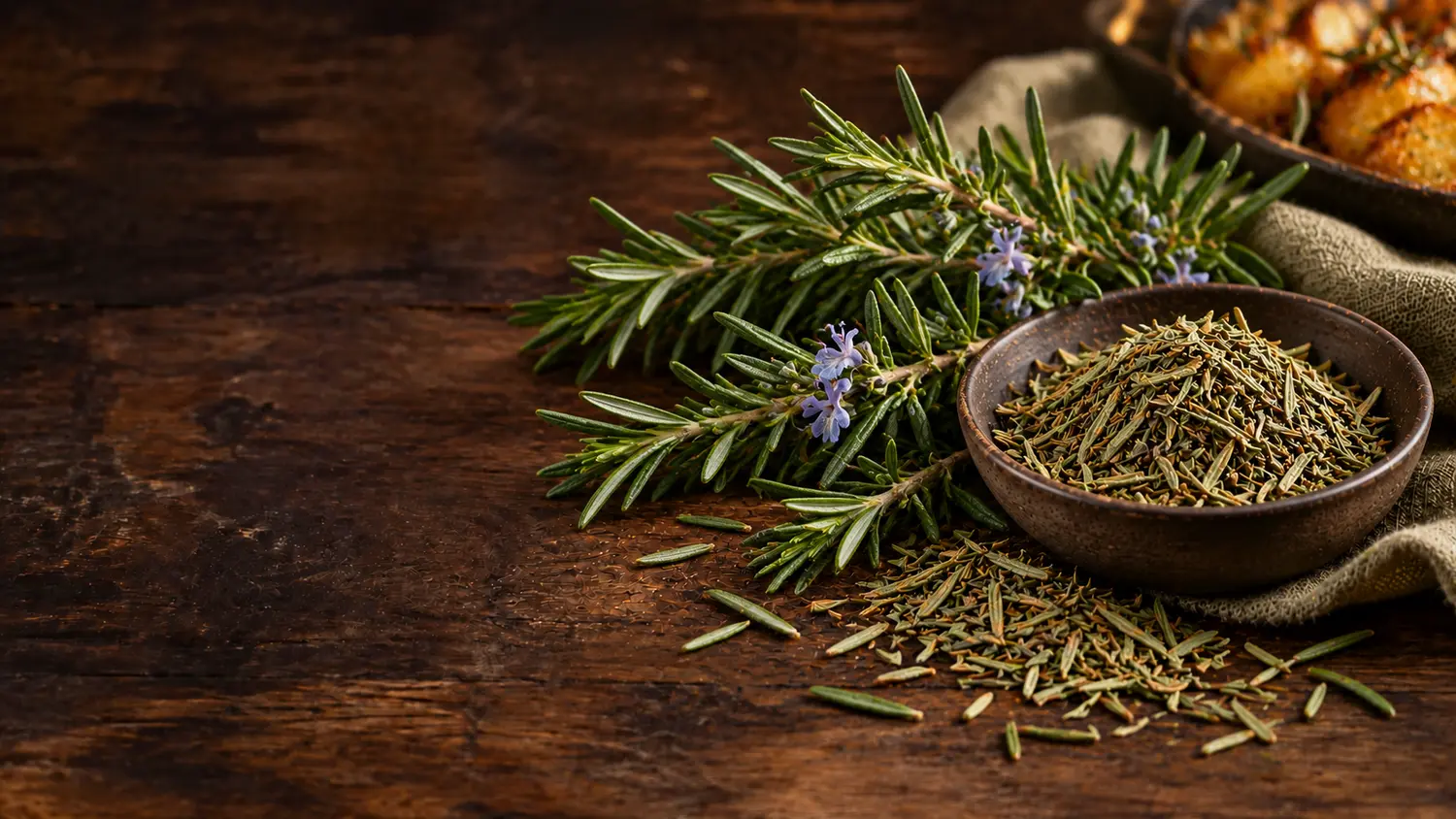
AI-generated illustration.
1054
What is it?
Rosemary consists of the narrow, robust leaves of an evergreen shrub. Its accepted name is now Salvia rosmarinus. Older books and many packets still say Rosmarinus officinalis. It is the same plant with a new name badge.
«Looks like pine needles, tastes better.»
The story
Rosemary is native to the Mediterranean region. It is a shrub used, among other things, in food. Sunshine, dry soil and coastal air run in the family. It therefore feels completely at home beside olive oil, garlic and a warm oven.
Flavour profile
The flavour is green, warm and slightly peppery, with woodland, lemon and cool notes. Fresh rosemary is more succulent and rounded. Dried rosemary is more concentrated and can become sharp if you pour as though the lid fell off.
Pairs well with
Potatoes, lamb, chicken, pork, focaccia, beans, tomatoes, mushrooms, courgettes and other roast vegetables. Rosemary likes fat, warmth and a little time. It is less enthusiastic about food intended to taste delicate and shy.
A whole sprig can go into the pot or roasting dish early and be removed before serving. Rub dried leaves between your fingers or crush them before use. Finely chopped fresh rosemary can be added later. Start small: one sprig can do more work than it appears to.
Did you know?
The apparent pine needles are narrow, leathery leaves. The plant also bears pale-blue flowers. It resembles a small conifer sprig, but fortunately should never be collected from the Christmas tree.
Common mistakes
Too much is the classic mistake. Food becomes bitter, harsh and more woodland walk than dinner. Another is leaving coarse dried leaves whole on the plate. Crush or chop them, or use a whole sprig and remove it.
Know the difference
Rosemary has long, firm leaves and a clear, almost conifer-like fragrance. Thyme has small, softer leaves and tastes rounder and earthier. Both withstand heat, but rosemary takes up far more room.
Fun facts
Both leaves and flowers contain the oil responsible for rosemary’s powerful fragrance. That explains why a small sprig can fill the kitchen before the potatoes have begun to colour.
Combines well with
Garlic, thyme, oregano, lemon, black pepper, paprika, bay, mustard and a little chilli. Rosemary likes distinctive companions, but let one of them lead the conversation at a time.
Sapidus best friends
Potato provides a mild base, olive oil carries the aroma and garlic completes the team. They are the spice cupboard’s equivalent of three people who actually arrive on time for dinner.
What should you avoid?
There is no absolute ban list. Be cautious with delicate fish, mild desserts and fresh salads where other flavours can easily disappear. Rosemary is a guest who will take the microphone if nobody watches.
Storage
Dried rosemary consists of dried, cut leaves. Store airtight, dark and dry. Whole leaves often retain aroma better than fine powder. Drying methods also affect how much aroma and which character remain. Smell the jar: if you can barely detect anything, neither will dinner.
6 claims linked to sources.
Source research was AI-assisted. Explore the background and follow the links to the sources.