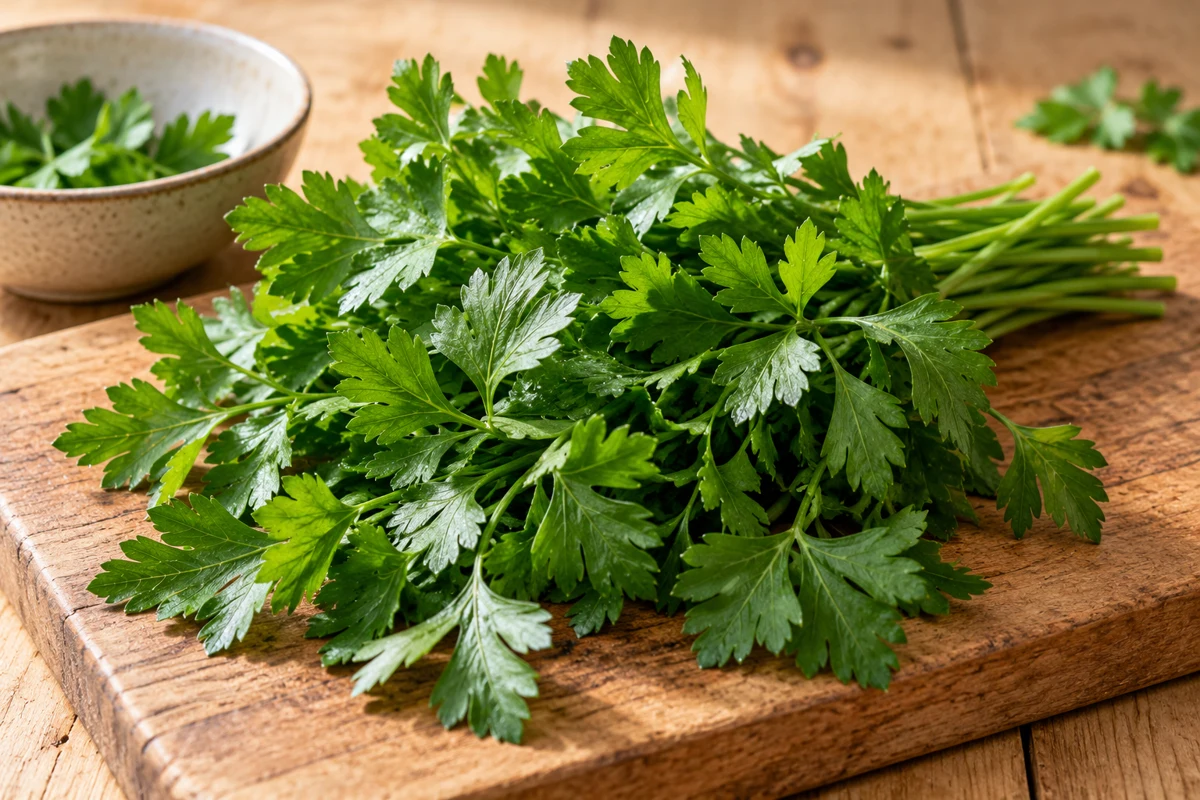
Parsley
Green and fresh, with a mild bitterness that can balance fatty, rich food.
AI-generated illustration.
1041
What is it?
Parsley is a herb with both curly and flat-leaf forms. Here we use the leafy herb, not parsley root as a vegetable.
«Green and fresh, with a mild bitterness that can balance fatty, rich food.»
Background
Curly and flat-leaf parsley are both useful. Choose good leaves with a pleasant aroma rather than letting shape alone decide.
Flavour profile
Green and fresh, with a mild bitterness that can balance fatty, rich food.
Pairs well with
Stews, potatoes, pasta, garlic sauces, salads and soups.
Chop a handful of washed and well-dried parsley and use it where you actually want a green flavour.
Did you know?
A bunch of parsley can provide both a green finish and aromatic stems for stock that will be strained.
Common mistakes
Using parsley only as untouched decoration, or chopping wet leaves into a heavy, clumpy mass.
Know the difference
Flat-leaf parsley and coriander can look similar. Smell a small crushed piece before making a whole sauce.
A little spice knowledge
Dry the leaves well before finely chopping, making them easier to distribute in oil and sauces.
Works well with
Garlic, lemon, chives and black pepper.
Sapidus’ favourite partners
Mix finely chopped parsley, lemon zest and a little garlic as a fresh finish for a meat stew.
Never combine with?
Large amounts of raw parsley are a distinct ingredient, not just decoration. We try small amounts in mild sauces.
Storage
Keep fresh leaves or stems chilled and use while in good condition. Store dried herbs tightly closed, dark and dry, away from cooker steam. Also follow the packaging advice.
Try it yourself
Taste a spoonful of stew before and after a small amount of chopped parsley. This suggestion is not presented as a test carried out by Sapidus.
1 claims linked to sources.
Source research was AI-assisted. Explore the background and follow the links to the sources.