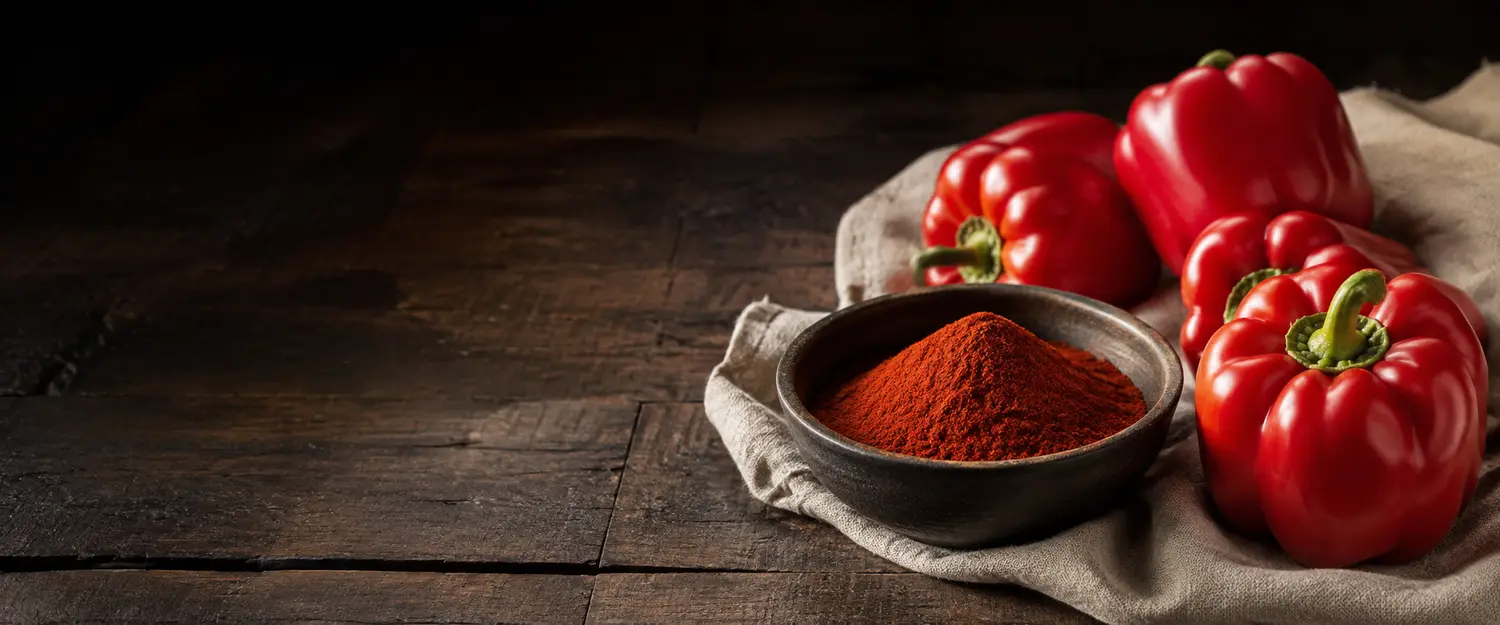
AI-generated illustration.
1061
What is it?
Paprika is ripe Capsicum fruit dried and ground into powder. That sounds almost too simple, but fruit selection, drying and grinding determine whether the jar tastes sweet, earthy, fruity, hot or smoky.
«The red jar we underestimate.»
The story
Capsicum annuum has its botanical origins in central Mexico. After travelling to Europe, paprika found new homes in Spain and Hungary, among other places. There it became more than red decoration: a spice with its own varieties, traditions and distinct personalities.
Flavour profile
Sweet paprika is mild, rounded and lightly fruity. Hot paprika has more bite, while smoked paprika suggests hearths and slow drying. Its red colour comes particularly from the pigments capsanthin and capsorubin. Colour is part of the ingredient rather than a promise of heat.
Pairs well with
Paprika likes chicken, pork, potatoes, eggs, tomatoes, beans, rice, soups, stews and grilled vegetables. It adds both colour and body, but often needs some fat and warmth to open up properly.
Let paprika meet a little oil or butter rather than a fiercely hot dry pan. Briefly remove the pot from the heat, stir in the spice and add liquid. You get the flavour rather than the bitter smell of an experiment taken too far.
Did you know?
The Codex standard limits ordinary paprika to 480 Scoville, while hot paprika is above 480 and below 900. That is gentle heat compared with chilli. Paprika primarily wants to provide flavour rather than test your courage.
Common mistakes
The classic mistake is scorching the powder. Another is assuming all paprika tastes alike. Sweet, hot and smoked paprika may share a shelf but do three different jobs. Read the jar before half a tablespoon goes into the sauce.
Know the difference
Ground paprika is made from dried peppers with seeds, placenta, calyx and stalk removed. Ground chilli may include several of those parts. That is one reason paprika often seems rounder and milder.
Fun facts
Genuine Pimentón de la Vera is slowly dried over holm oak and/or oak smoke for 10–15 days. It consequently tastes as though someone captured a small bonfire in the spice jar, in a good way.
Combines well with
Garlic, onion, cumin, oregano, thyme, black pepper, chilli, tomato and lemon. Paprika is especially good with spices that give direction to its rounded flavour.
Sapidus best friends
Garlic provides backbone, tomato gives body and a little acidity keeps the red flavour lively. Add fat and the aroma has a way to travel through the dish.
What should you avoid?
Use smoked paprika cautiously with delicate fish, mild cheeses and light sauces. It does not enter the room quietly. Sweet paprika is more polite, but can also turn everything red without improving the food.
Storage
Paprika powder likes airtight, dark, dry storage, far from steam above the cooker. Buy a smaller jar you will finish rather than a family-sized one that slowly turns from red spice into a brick-coloured memory.
6 claims linked to sources.
Source research was AI-assisted. Explore the background and follow the links to the sources.