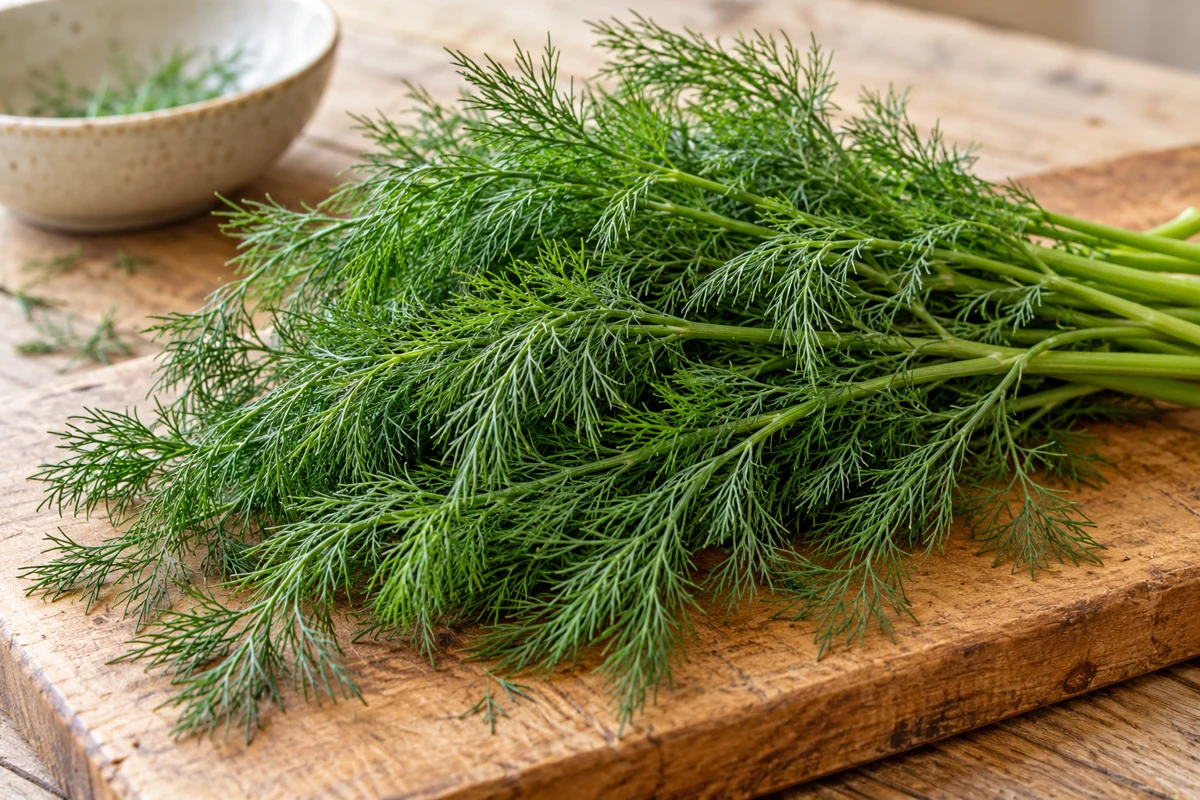
Dill
Fresh, green and distinctly herbal. This guide focuses on the leaves.
AI-generated illustration.
1040
What is it?
Dill is a herb with fine, feathery leaves. Both leaves and seeds can be used in food, but as different ingredients.
«Fresh, green and distinctly herbal. This guide focuses on the leaves.»
Background
A bunch of dill, dried dill and dill seeds offer different possibilities. Here, the leaves and their green flavour are the main focus.
Flavour profile
Fresh, green and distinctly herbal. This guide focuses on the leaves.
Pairs well with
Fish, potatoes, cucumber, eggs, shellfish and yoghurt dressings.
Save some fresh dill for the end if possible. Chop finely just before stirring into a cold sauce.
Did you know?
One dill plant can provide both a leafy herb and a seed spice. The recipe must specify which part to use.
Common mistakes
Cooking all the fresh dill for a long time when the aim is a fresh finish, or using coarse stems without chopping.
Know the difference
Dill seeds have a different role from the fresh leaves. The recipe must tell you which part you need.
A little spice knowledge
Fine stems can be chopped with the leaves; coarse stems can instead infuse a liquid that will be strained.
Works well with
Lemon, chives, pepper and mustard.
Sapidus’ favourite partners
Stir chopped dill and a few drops of lemon into yoghurt for fish or potatoes.
Never combine with?
Dill often suits fish, but is not necessary in every fish dish. Keep a sample without the herb if useful.
Storage
Keep fresh leaves or stems chilled and use while in good condition. Store dried herbs tightly closed, dark and dry, away from cooker steam. Also follow the packaging advice.
Try it yourself
Divide a hot potato in two and compare dill added early with dill sprinkled on at serving. This suggestion is not presented as a test carried out by Sapidus.
1 claims linked to sources.
Source research was AI-assisted. Explore the background and follow the links to the sources.