AI-generated illustration.
1053
What is it?
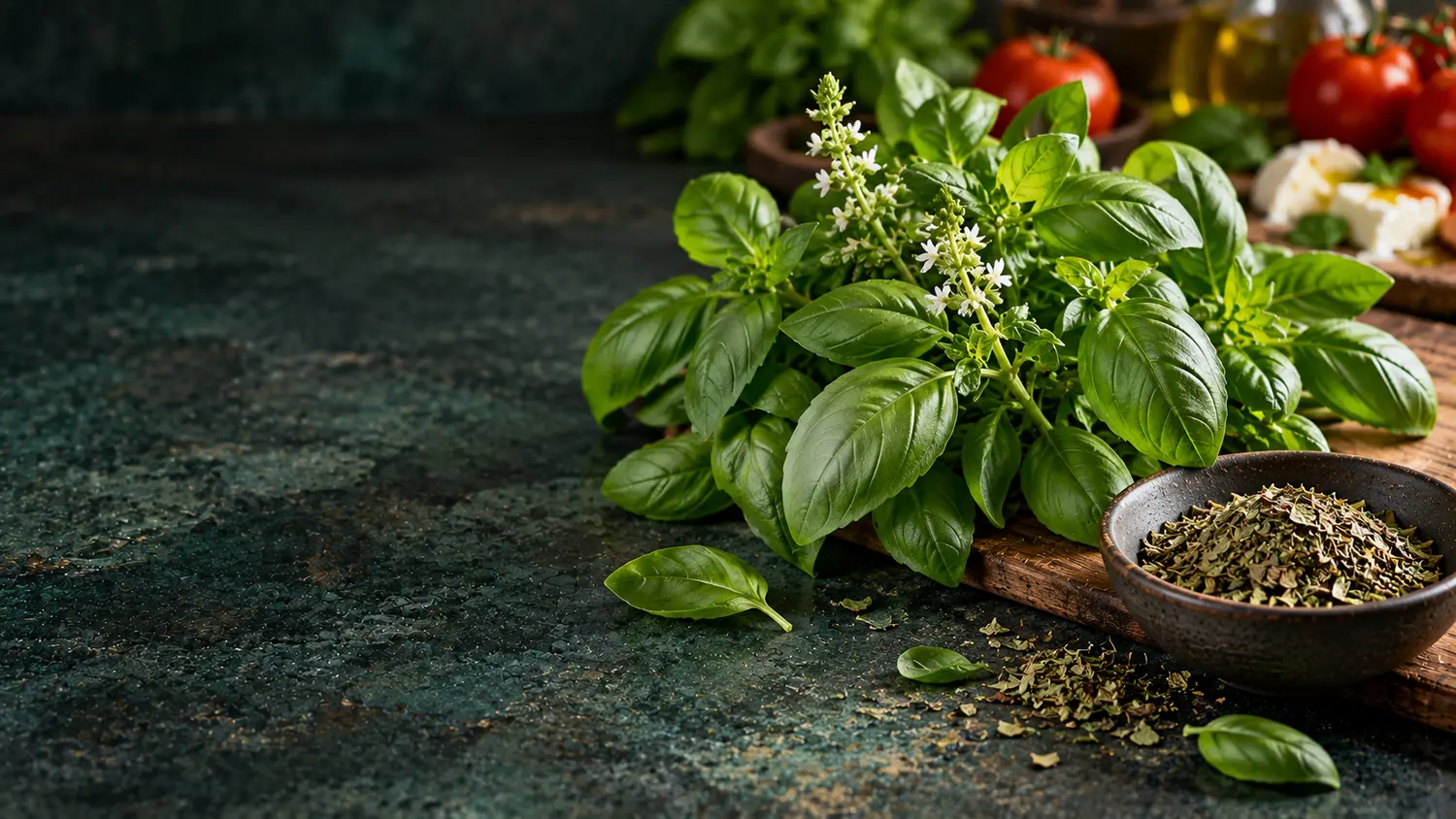
Basil is an aromatic herb that usually lives for one growing season. The most familiar kitchen type is Ocimum basilicum. Its leaves can be used fresh or dried, but the two forms behave so differently that they almost deserve separate job descriptions.
«Green, delicate and best added at the end.»
The story
Basil is often associated with Italy, but its native range runs from tropical and subtropical Asia to northern Australia. It was cultivated far beyond its homeland and eventually found a regular place in pesto, tomato sauce, salads and Asian dishes. Italy earned the fame. Warmth came first.
Flavour profile
Fresh sweet basil is green, gently peppery and slightly sweet, with a hint of clove. Thai basil is firmer and more assertive, often with an anise-like flavour. Dried basil is quieter, darker and less succulent in character.
Pairs well with
Tomato, mozzarella, pasta, pizza, pesto, eggs, chicken, courgette, strawberries and lemon. Thai basil works particularly well with coconut milk, chilli, fish sauce and quick stir-fries. Basil likes food with freshness and room to be noticed.
Dried basil can simmer for a while. Fresh basil should go into the pot right at the end. Add the prettiest leaves after turning off the heat. Tear or cut them just before use so the aroma reaches the food rather than staying on the chopping board.
Did you know?
Ordinary sweet basil has soft, pale-green leaves, but there are also varieties with purple leaves and aromas reminiscent of lemon, cinnamon or liquorice. The basil shelf is more of a playlist than a solo performance.
Common mistakes
The most common mistake is cooking fresh basil for too long. The fresh aroma disappears and the leaves become dark and sad. Another is using equal quantities of fresh and dried basil. Start cautiously with dried basil and taste as you go.
Know the difference
Sweet or Genovese basil has soft leaves and the familiar flavour of pesto and tomato dishes. Thai basil has firmer leaves, often purple stems or flowers, and a distinct anise flavour. One meets pasta; the other meets coconut milk and chilli.
Fun facts
A cut basil stem can be placed in a glass of water to grow roots. Kew offers this as a simple growing tip. Suddenly, leftovers from dinner have plans for a new career.
Combines well with
Garlic, oregano, parsley, thyme, chilli, black pepper, lemon, ginger and coriander. Choose according to the dish: garlic and oregano for an Italian direction, chilli and ginger for an Asian one. Basil does not need the whole spice cupboard on the same shift.
Sapidus best friends
Tomato adds acidity and sweetness, olive oil carries the aroma, and garlic adds depth. Together they underpin pesto, pasta, pizza and roughly half the reasons we love Italian food.
What should you avoid?
There is no absolute ban list. Fresh basil can be overwhelmed by large quantities of rosemary, cloves or smoky flavours, however. Hours of vigorous boiling do it no favours either. Basil is best as a fresh finish rather than an all-day pot attendant.
Storage
Dried basil consists of cut or rubbed dried leaves. Store airtight, dark and dry. Fresh basil is sensitive to chilling: in one experiment, leaves lost more important aroma compounds at 5 °C than at 10 and 15 °C. If using it soon, stand the stems in a little water on the kitchen counter. A cold refrigerator can cause dark leaves and less aroma.
6 claims linked to sources.
Source research was AI-assisted. Explore the background and follow the links to the sources.