It tastes almost right. What is missing?
You followed the recipe, but the dish is not quite right. Start by identifying what you actually taste. A small sample on a spoon is better than five new ingredients in the whole pot.
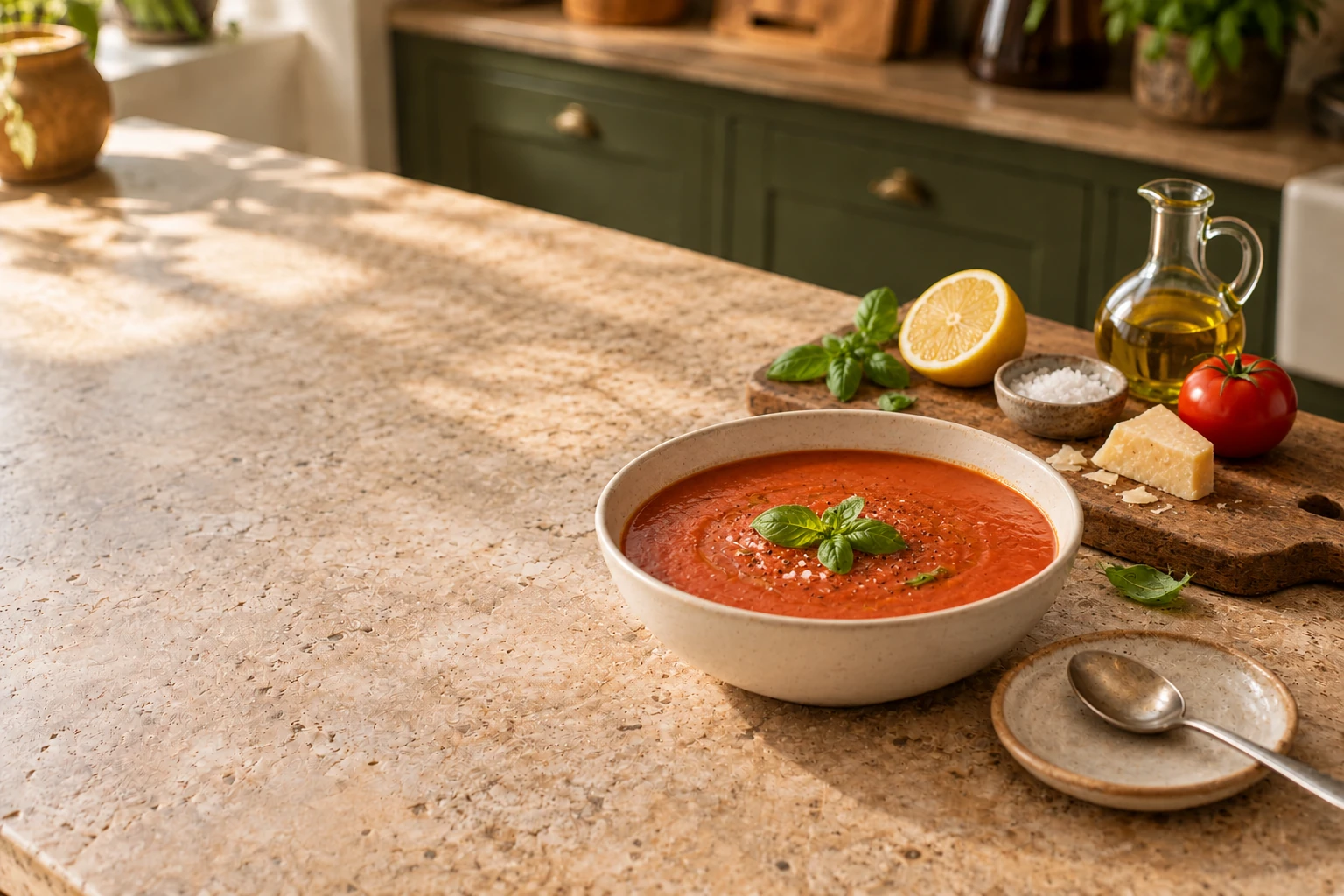
AI-generated illustration.
What is not quite right?
Choose the description that best fits the food. The suggestion helps you make a small comparison sample before deciding.
Test salt and freshness separately.
Try this: Take two small samples. Add a small pinch of salt to one and a drop of lemon or vinegar to the other. Compare before changing the whole pot. If neither helps, the dish may lack concentration or a well-cooked flavour base.
Avoid: Do not add stock concentrate, salt, sugar and vinegar all at once. You will lose track of what helped.
These suggestions are starting points for a small taste test, not a guarantee that every dish can be rescued.
Five basic tastes, many impressions.
| Basic taste | Examples | Remember |
|---|---|---|
| Salt | Salt, soy sauce, bacon, parmesan | Several ingredients can contribute salt to the same pot. |
| Sour | Lemon, vinegar, tomato, yoghurt | Can bring freshness, but more is not always better. |
| Sweet | Carrot, softened onion, sweet potato, sugar | Natural sweetness is often enough; sugar is a choice, not a mandatory step. |
| Bitter | Some vegetables, coffee and browned cooking aromas within the overall flavour | Pleasant bitterness and burnt flavour are not the same. |
| Umami | Tomato, mushrooms, parmesan, meat and fermented sauces | Can add depth. Many umami-rich products also add salt. |
Flavour also includes aroma, temperature, fat, texture and mouthfeel. Chilli heat is a burning sensation, not a sixth basic taste. A soup can therefore have enough salt yet still seem thin and unsatisfying.
One change, one fresh taste.
Taste at eating temperature
Let a small spoonful cool enough to assess the flavour properly. A scalding mouthful is a poor basis for comparison.
Describe the problem
‘Not good enough’ gives little direction. Try ‘flat’, ‘too salty’, ‘very acidic’ or ‘lacks body’. Also consider whether the ingredients are fully cooked.
Make two small samples
Put a little food in two small bowls. Leave one unchanged. Adjust the other with a small amount of one ingredient. Use clean utensils and compare.
Transfer carefully to the pot
If the sample improves, add a little to the main dish, stir and taste again. Do not blindly scale drops from one spoonful to several litres; taste thresholds and quantities matter.
Stop when the main ingredient comes through
The aim is not to taste lemon, soy sauce or sugar distinctly. The aim is a more cohesive dish without losing its own character.
Small choices in familiar dishes.
The tomato soup is a little flat
Test salt and a few drops of acid separately. Tomatoes vary in sweetness and acidity. Do not add more vinegar simply because it appears in the ingredient list.
Bœuf Sans Vin is missing something
First check stock strength, salt, tenderness and sauce consistency. Vegetables provide the sweetness in this recipe; we do not add sugar as standard. More soy sauce can make the stew too salty.
The curry is good but a little heavy
Try a small sample with a little lime if it suits the version. If it is already salty, more fish sauce is not the automatic next step. Consider coconut milk, curry paste and stock together.
The ragù tastes weak
Consider whether it needs more time or reduction before adding new flavours. Parmesan contributes both umami and salt. It should still taste of slow-cooked meat and tomatoes.
Not everything needs a counterweight.
Dilution lowers the concentration of salt, chilli and flavour in every spoonful. An acidic ingredient can change how sweetness is perceived, but does not remove sugar. Cream can round out a sauce but cannot remove burnt garlic.
If the food is clearly scorched, separate the good part from the burnt part or remake the base. If hard vegetables or tough stewing meat are the problem, you often need proper cooking rather than more seasoning. Flavour balance is the finishing touch, not a substitute for cooking ingredients through.
Give the food a couple of minutes, taste again and assess what you just changed. Note an adjustment that works; that is how the next dinner becomes easier.
Sources and further reading
Source research is AI-assisted. Kitchen examples, proposed tests and troubleshooting are Sapidus’ practical applications of the source material.