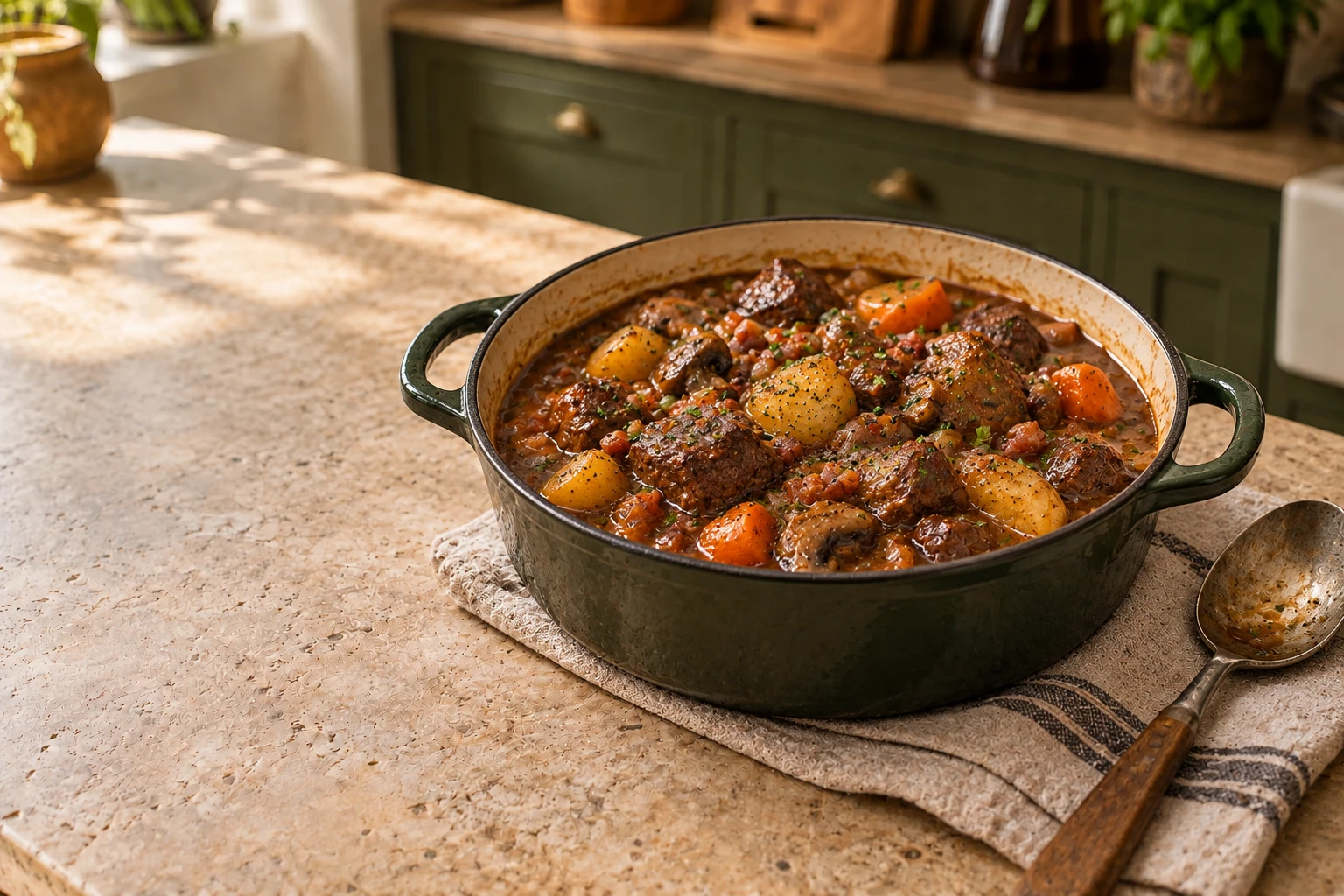
Browning builds flavour.
Room in the pan and a drier surface allow meat to develop browned flavours before it goes into the stew.
AI-generated illustration.
What do you notice?
An overcrowded pan quickly fills with liquid and the meat stays grey. With fewer pieces, browned surfaces and a distinct roasting aroma develop more readily.
What happens in the food?
During browning, sugars react with amino groups from substances including amino acids and proteins. These reactions create new aroma and colour compounds and are called Maillard reactions. Caramelisation is a different process involving sugars transformed by heat. Both can contribute during cooking.
Why does water get in the way?
While a lot of water evaporates from the surface, its temperature is limited. As it dries, it can become hotter and browning can accelerate. A large quantity of meat also cools the pan. Maillard reactions have no single starting temperature that applies to all foods; time, moisture and ingredients all matter.
What should you do in the kitchen?
Dry the surface of the meat and heat a wide pan with a little olive oil. Brown in batches, leave the pieces in contact with the pan for a while and adjust the heat if the oil smokes or the bottom turns black. For stews, build colour rather than cooking the meat through. Loosen the browned residue with some of the recipe’s liquid and carry that flavour into the dish. Blackened residue tastes bitter and should not be scraped into the sauce.
Does browning seal meat?
No. The crust is not a waterproof seal. Browning is primarily about flavour and colour. Juiciness also depends on the ingredient, temperature and cooking time.
Try it yourself.
Use two equal portions of mushrooms with the same amount of oil. Cook one in a wide pan and crowd the other into a small pan, at roughly the same heat. Observe when liquid collects and when the mushrooms colour. Compare flavour once both portions are cooked. The pans differ, so this is a demonstration rather than a controlled laboratory test.
This is a suggestion for your own exploration, not a test carried out by Sapidus.
Put it into practice.
The wine-free beef stew →
Brown the meat first, then give it time to become tender.
Give mushrooms room →
The same challenge with liquid arises when frying mushrooms.
Sources and further reading
Source research is AI-assisted. Practical suggestions and flavour assessments are Sapidus’ applications of the source material.