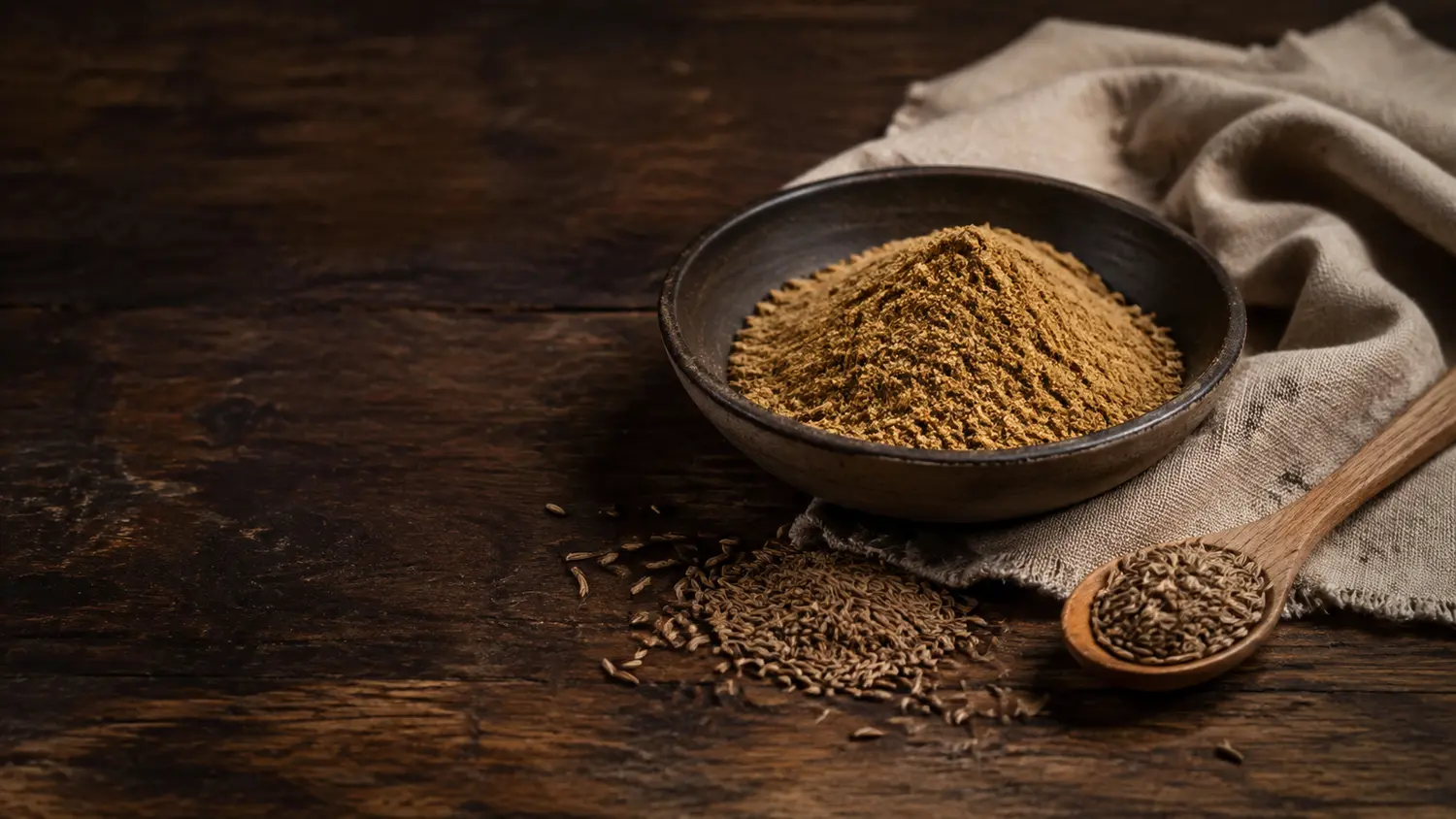
AI-generated illustration.
1058
What is it?
Cumin is the spice from Cuminum cyminum. What we normally call seeds are botanically small dried fruits. They are sold whole, cracked or ground. The same ingredient, but with rather different behaviour in the pot.
«You recognise the aroma before the name.»
The story
The plant is an annual native to the area from Iraq to Afghanistan. From there cumin found its way into kitchens far beyond its homeland. In Norway, many recognise its smell in taco seasoning before learning which spice is responsible.
Flavour profile
Cumin is warm, earthy and slightly nutty, with a distinctive aroma suggesting citrus and dry wood. It gives food darker, deeper flavours. Use too much and it spreads its coat over the whole dish.
Pairs well with
Tacos, kebabs, curries, chilli con carne, hummus, beans, lentils, lamb, chicken, tomato sauces and roast root vegetables. Cumin especially likes food that can accommodate warmth, acidity and body.
Gently heat whole seeds in a dry pan until fragrant, then crush them. This gives a fresher, rounder flavour than powder stored for a long time. Stop while the aroma is pleasant: black seeds are not a quality mark.
Did you know?
The spice jar says seeds; the botanist says fruit. Each narrow, ridged “seed” is actually a dried fruit. Kitchen language can keep seeds: after all, we are making dinner rather than sitting a botany exam.
Common mistakes
The common mistake is treating cumin like mild paprika. It is not. Start with a little, let it work and taste before adding more. Another mistake is scorching the powder in the pan: bitterness is no shortcut to depth.
Know the difference
Cumin and caraway look similar and both belong to the carrot family, but they are different species. Caraway tastes fresher and more anise-like; cumin is warmer and earthier. A one-for-one swap makes a very different dinner.
Fun facts
Nigella, sometimes called “black cumin”, is not dark cumin but seed from another plant. In a study of cumin essential oil, cuminaldehyde was the largest individual component in the samples tested. Its name almost gives away where it lives.
Combines well with
Coriander seed, chilli, garlic, paprika, oregano, black pepper, cinnamon, cardamom, ginger and turmeric. Cumin ties many blends together but need not bring the entire spice cupboard on the trip.
Sapidus best friends
Tomato gives body, lime adds freshness and yoghurt rounds off the darker notes. These are three simple ways to give cumin space without handing it the microphone.
What should you avoid?
Use caution with delicate white fish, light cream sauces and mild egg dishes where small flavours should remain small. Cumin has few enemies; it simply has a voice that carries exceptionally well.
Storage
Whole seeds retain aroma better than pre-ground powder. Store both airtight, dark and dry, away from steam and cooker heat. Buy small amounts of powder frequently or grind what you need. Research on grinding shows how much volatile aroma can be lost through harsh processing.
6 claims linked to sources.
Source research was AI-assisted. Explore the background and follow the links to the sources.