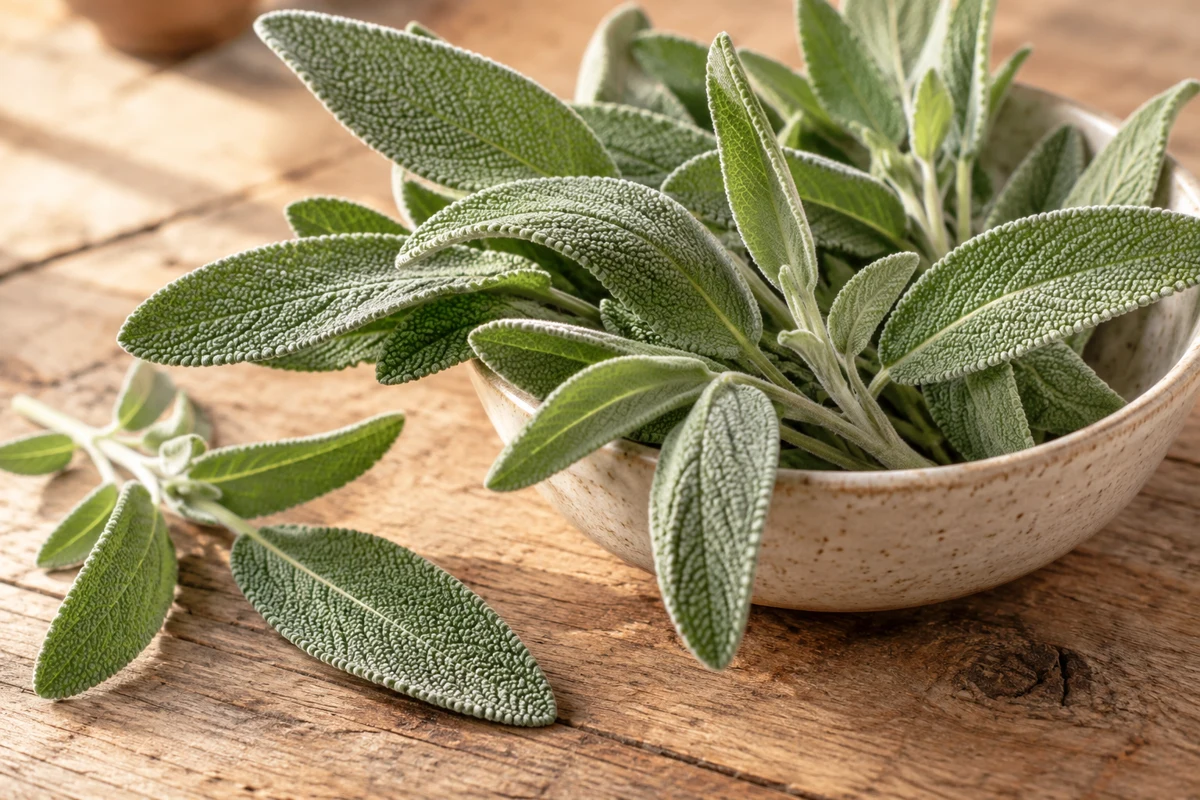
Sage
Powerful, herbal and slightly camphor-like. It can give plenty of personality in small amounts.
AI-generated illustration.
1044
What is it?
Common culinary sage is Salvia officinalis. The leaves can be used fresh or dried.
«Powerful, herbal and slightly camphor-like. It can give plenty of personality in small amounts.»
Background
Fresh leaves make it easy to measure a few at a time. Assess dried sage as a separate product.
Flavour profile
Powerful, herbal and slightly camphor-like. It can give plenty of personality in small amounts.
Pairs well with
Pork, chicken, beans, potatoes, pumpkin and gnocchi.
Try a few leaves in olive oil over a moderate heat, and use the oil for gnocchi or potatoes. Watch so the leaves do not turn black.
Did you know?
Salvia is a large genus, while this food guide is limited to Salvia officinalis.
Common mistakes
Too many leaves or badly burnt leaves can produce a dominant, bitter result.
Know the difference
Ornamental salvias form a large group. This guide covers culinary sage, not every plant sold as Salvia.
A little spice knowledge
In gnocchi, the leaves can provide both aroma and texture, but need controlled frying. Burnt leaves make the oil bitter.
Works well with
Garlic, lemon, black pepper and a small amount of rosemary.
Sapidus’ favourite partners
Toss fried gnocchi with a little sage oil and taste before adding cheese.
Never combine with?
Sage can quickly dominate a mild fish sauce. Test one small leaf in a little sauce before adding the herb to the rest.
Storage
Keep fresh leaves or stems chilled and use while in good condition. Store dried herbs tightly closed, dark and dry, away from cooker steam. Also follow the packaging advice.
Try it yourself
Fry two small portions of potatoes and add a little finely chopped sage to just one. This suggestion is not presented as a test carried out by Sapidus.
1 claims linked to sources.
Source research was AI-assisted. Explore the background and follow the links to the sources.