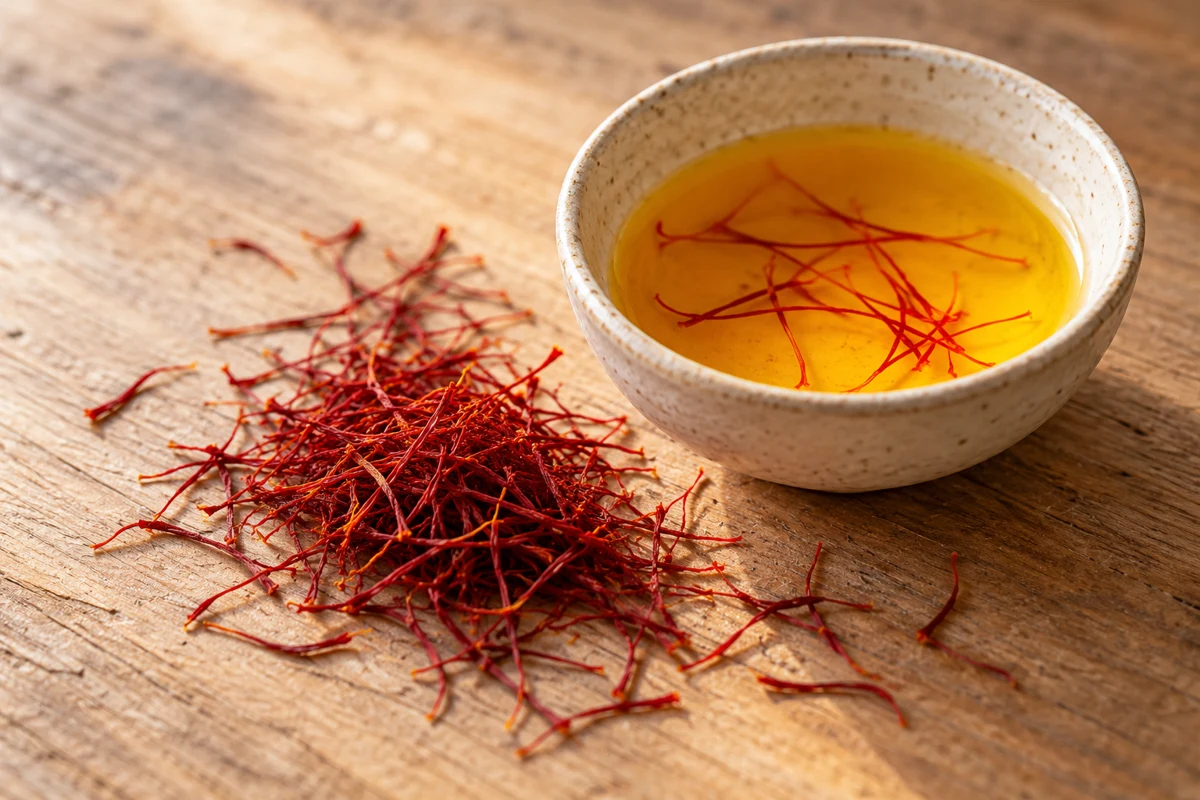
Saffron
Distinctive, floral and slightly bitter. The flavour cannot be described simply as yellow.
AI-generated illustration.
1051
What is it?
Saffron is the dried stigmas of the flower Crocus sativus. The red threads are used for both aroma and colour.
«Distinctive, floral and slightly bitter. The flavour cannot be described simply as yellow.»
Background
The threads are easy to recognise and infuse in liquid. A recipe with a clear weight is useful when small amounts matter.
Flavour profile
Distinctive, floral and slightly bitter. The flavour cannot be described simply as yellow.
Pairs well with
Rice, fish soup, shellfish, sauces and saffron baking.
Let the threads infuse in a little of the recipe's warm liquid before adding them. Include the liquid and follow the recipe's quantity.
Did you know?
The flower's stigmas, not its petals, become the spice saffron.
Common mistakes
Sprinkling threads unevenly over finished food when you want even flavour, or using extra for a stronger colour.
Know the difference
Turmeric and safflower can add colour, but do not replace saffron's aroma. Names and price alone do not prove quality either.
A little spice knowledge
Include the infusion liquid in the dish; this is where much of the colour and aroma should be distributed.
Works well with
Fish stock, lemon, garlic and a restrained amount of fennel.
Sapidus’ favourite partners
Try saffron in a small portion of fish soup before adding it to the whole pot.
Never combine with?
Hot chilli and many powerful spices can make saffron's aroma difficult to recognise. Give it a simple setting if possible.
Storage
Store tightly closed, dark and dry, away from cooker steam. Smell before use and buy an amount suited to your consumption. Follow the packaging advice for fresh or processed products.
Try it yourself
Let a few threads infuse in a little warm water, and compare aroma and colour with a small turmeric sample. This suggestion is not presented as a test carried out by Sapidus.
1 claims linked to sources.
Source research was AI-assisted. Explore the background and follow the links to the sources.