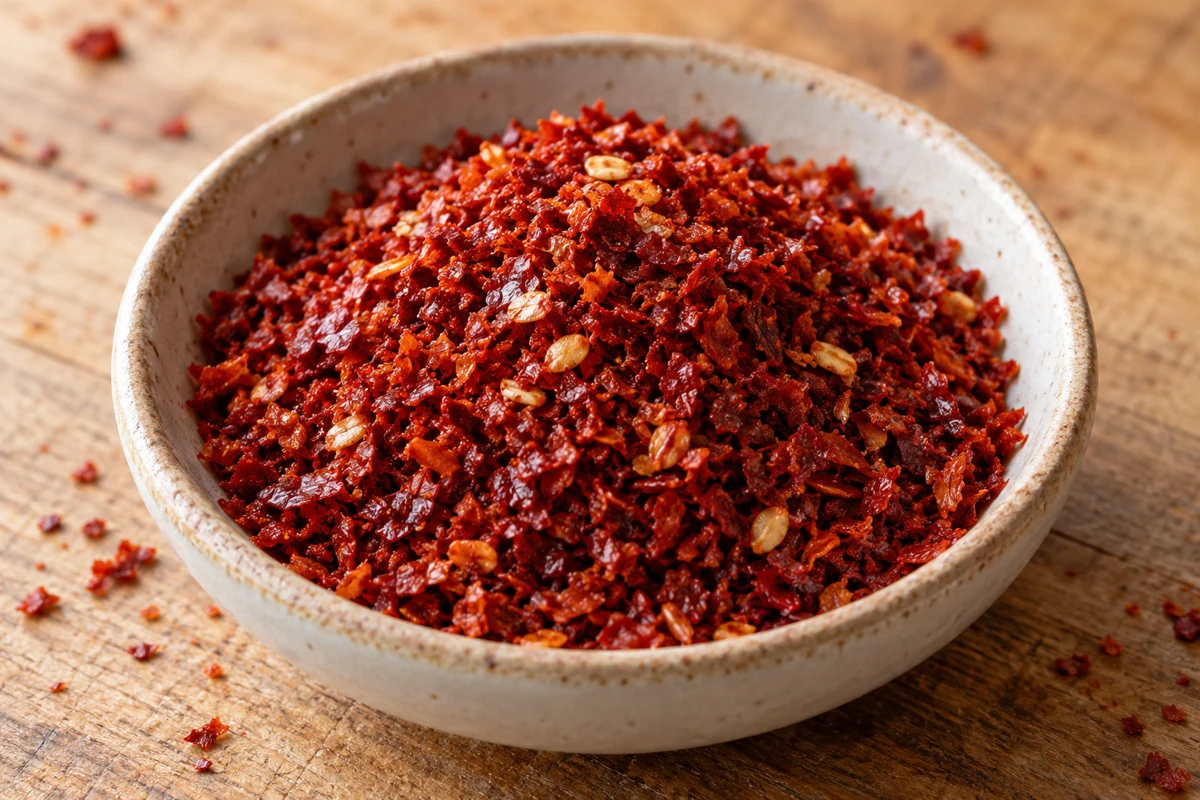
Pul biber
Often fruity and warming with moderate heat, but there is no fixed level applying to every product.
AI-generated illustration.
1052
What is it?
Pul biber refers to chilli flakes in Turkish cooking. Products can vary in heat, processing and added ingredients. Look at the packet you use.
«Often fruity and warming with moderate heat, but there is no fixed level applying to every product.»
Background
Pul biber is already an everyday seasoning in our kitchen. This guide explains product variation and practical use without promising one fixed heat level.
Flavour profile
Often fruity and warming with moderate heat, but there is no fixed level applying to every product.
Pairs well with
Eggs, yoghurt, lamb, chicken, tomatoes, soups and grilled vegetables.
Sprinkle a little over finished food, or briefly warm the flakes in olive oil over a gentle heat. Taste before adding more.
Did you know?
Bart's ingredients list includes red pepper flakes, salt and sunflower oil. Check your own packet; the name alone does not tell you whether it is salted.
Common mistakes
Expecting equal heat from every packet, or letting the flakes scorch in very hot oil.
Know the difference
Aleppo pepper and pul biber are sometimes used as overlapping trading names. This does not mean every product has the same origin or formula.
A little spice knowledge
Try a dry sprinkling first. Then compare with flakes briefly warmed in oil without burning them.
Works well with
Sumac, cumin, garlic, oregano and lemon.
Sapidus’ favourite partners
Try a little pul biber on yoghurt with garlic and olive oil as an accompaniment to grilled food.
Never combine with?
Mild pul biber and a hot chilli-flake blend need different quantities. Exchange by taste, not simply volume.
Storage
Store tightly closed, dark and dry, away from cooker steam. Smell before use and buy an amount suited to your consumption. Follow the packaging advice for fresh or processed products.
Try it yourself
Compare a little of your pul biber with regular chilli flakes on separate spoonfuls of yoghurt. This suggestion is not presented as a test carried out by Sapidus.
2 claims linked to sources.
Source research was AI-assisted. Explore the background and follow the links to the sources.