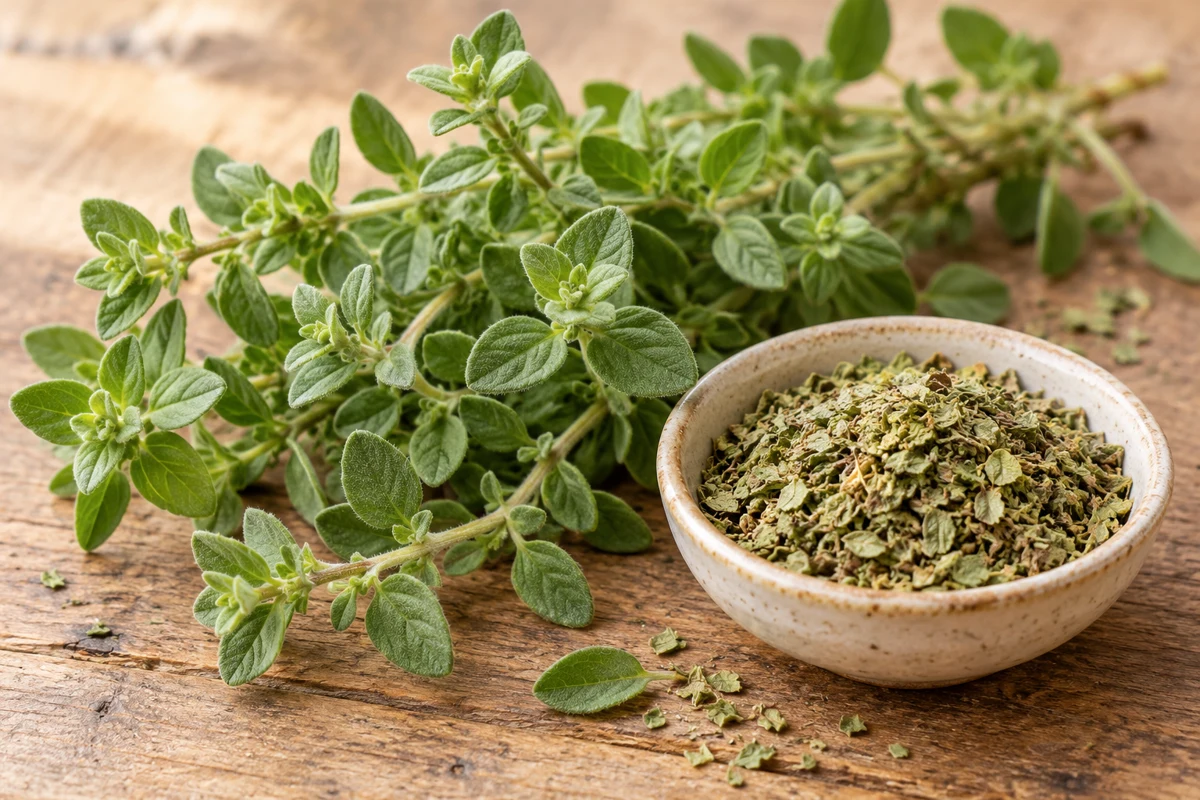
Marjoram
Soft, aromatic and often milder and sweeter in character than oregano.
AI-generated illustration.
1045
What is it?
Culinary marjoram is often Origanum majorana, called sweet marjoram in English. It is closely related to oregano.
«Soft, aromatic and often milder and sweeter in character than oregano.»
Background
Norwegian jars often say merian; English recipes say marjoram. The species name helps when common names are used loosely.
Flavour profile
Soft, aromatic and often milder and sweeter in character than oregano.
Pairs well with
Chicken, pork, beans, tomatoes, potatoes and mild stews.
Try marjoram when you want herbal character without as much of oregano's edge. Taste the herb you have before exchanging them.
Did you know?
Marjoram and oregano can be close relatives without being the same ingredient.
Common mistakes
Expecting identical flavour from a one-to-one exchange with oregano, or drowning mild marjoram in lots of other herbs.
Know the difference
Oregano and marjoram are closely related, but trading names can be confusing. Check the species name if the distinction matters.
A little spice knowledge
Let marjoram be the main herb in a simple dish first. This makes its contribution easier to recognise.
Works well with
Thyme, parsley, garlic and lemon.
Sapidus’ favourite partners
Try a little dried marjoram in a mild bean stew with onion and olive oil.
Never combine with?
Mild marjoram can be difficult to recognise in a strong chilli dish. Adding more is not always the answer.
Storage
Keep fresh leaves or stems chilled and use while in good condition. Store dried herbs tightly closed, dark and dry, away from cooker steam. Also follow the packaging advice.
Try it yourself
Divide a little tomato sauce and compare a small pinch of oregano with the same amount of marjoram. This suggestion is not presented as a test carried out by Sapidus.
1 claims linked to sources.
Source research was AI-assisted. Explore the background and follow the links to the sources.