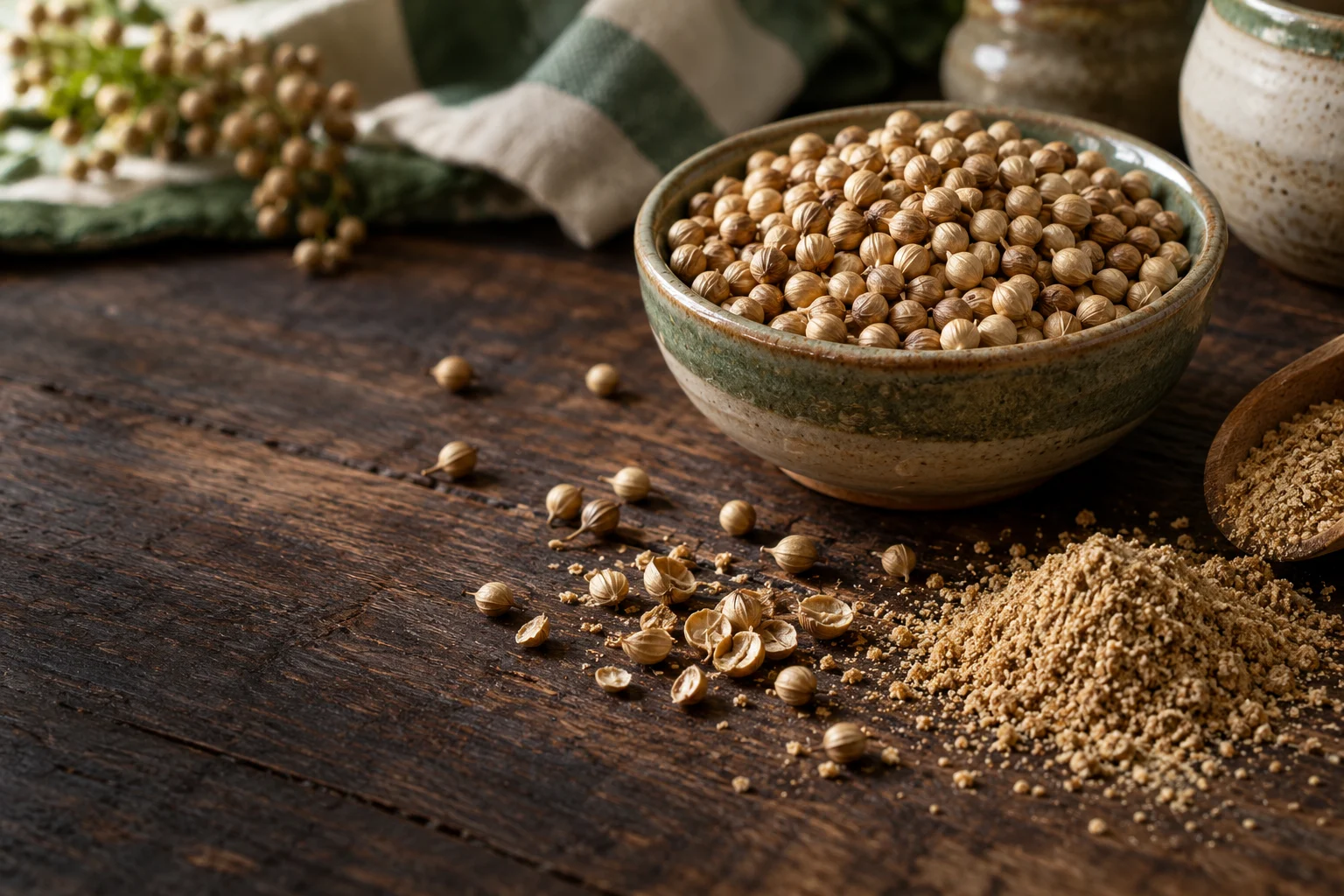
Coriander seeds
Coriander seeds have a mild, warm citrus character with a little sweetness.
AI-generated illustration.
1029
What is it?
Coriander seeds are the dried, ripe fruits of the coriander plant, Coriandrum sativum. In the kitchen we call them seeds, although fruit is the botanical term. This guide covers whole seeds and ground coriander, rather than the fresh herb.
«Coriander seeds have a mild, warm citrus character with a little sweetness.»
Background
The coriander plant is an annual that provides both leaves and aromatic fruits for cooking. It helps to think of them as two different kitchen ingredients, even though they grow on the same plant.
Flavour profile
Coriander seeds have a mild, warm citrus character with a little sweetness. They do not have the same green, distinctive flavour as the fresh leaves. Crush a few seeds and smell them: get to know this spice without judging it by the herb pot.
Pairs well with
Chicken, pork, lamb, lentils, chickpeas, carrots, cauliflower and potatoes. Also try a small amount in bread or a citrus marinade. For fish, we would start with finely ground coriander and a light hand.
Crush a small amount of whole seeds in a mortar just before use. For a rounder, toasted character, warm them gently in a dry pan, watch closely and remove when fragrant. Cool a little before grinding. The aim is aroma, not the darkest possible colour.
Did you know?
You may enjoy coriander seeds even if you dislike fresh coriander leaves. They have different flavour profiles and are not directly interchangeable. Give the seeds their own little audition before dismissing the whole plant.
Common mistakes
Whole seeds left in a smooth sauce can create an unwanted crunch. Grind them for an even texture. Excessive toasting can taste burnt. An old, weak jar will not automatically become good if you double the quantity.
Know the difference
Coriander seeds are usually round and light brown. Cumin has long, narrow seeds and a different, more pronounced earthy flavour. They work well together, but neither is a neutral replacement for the other. Ground powders are harder to tell apart, so keep the labels.
A little spice knowledge
After the plant flowers, it forms the fruits we use as a spice. The RHS also describes cooking with unripe green seeds. The dried seeds in your spice cupboard are therefore just one of the plant's possible kitchen roles.
Works well with
Cumin, ginger, garlic, chilli, paprika, black pepper and lemon zest. Coriander seeds can build a mild base with cumin, while chilli lets you control the heat separately.
Sapidus’ favourite partners
Carrots, chickpeas and lemon. Try a small amount of crushed coriander seeds on carrots roasted with olive oil. Season with lemon after cooking. This makes it easy to identify what the seeds contribute.
Never combine with?
There is no absolute blacklist. Be cautious with coarse seed pieces in delicate sauces and large amounts with mild fish. If a recipe calls for fresh coriander at the end, ground coriander will produce a different dish rather than the same freshness.
Storage
Store whole seeds and powder tightly closed, dark and dry. Grind small batches if possible. Keep steam out of the jar and smell before measuring. The quantity you use and how often you cook with it should determine the size of the jar.
Try it yourself
Divide a little yoghurt between two bowls. Add a small pinch of finely ground coriander seeds to one and a little chopped fresh coriander to the other. Compare aroma and flavour. This is your own tasting exercise, not a claim that either is better.
5 claims linked to sources.
Source research was AI-assisted. Explore the background and follow the links to the sources.