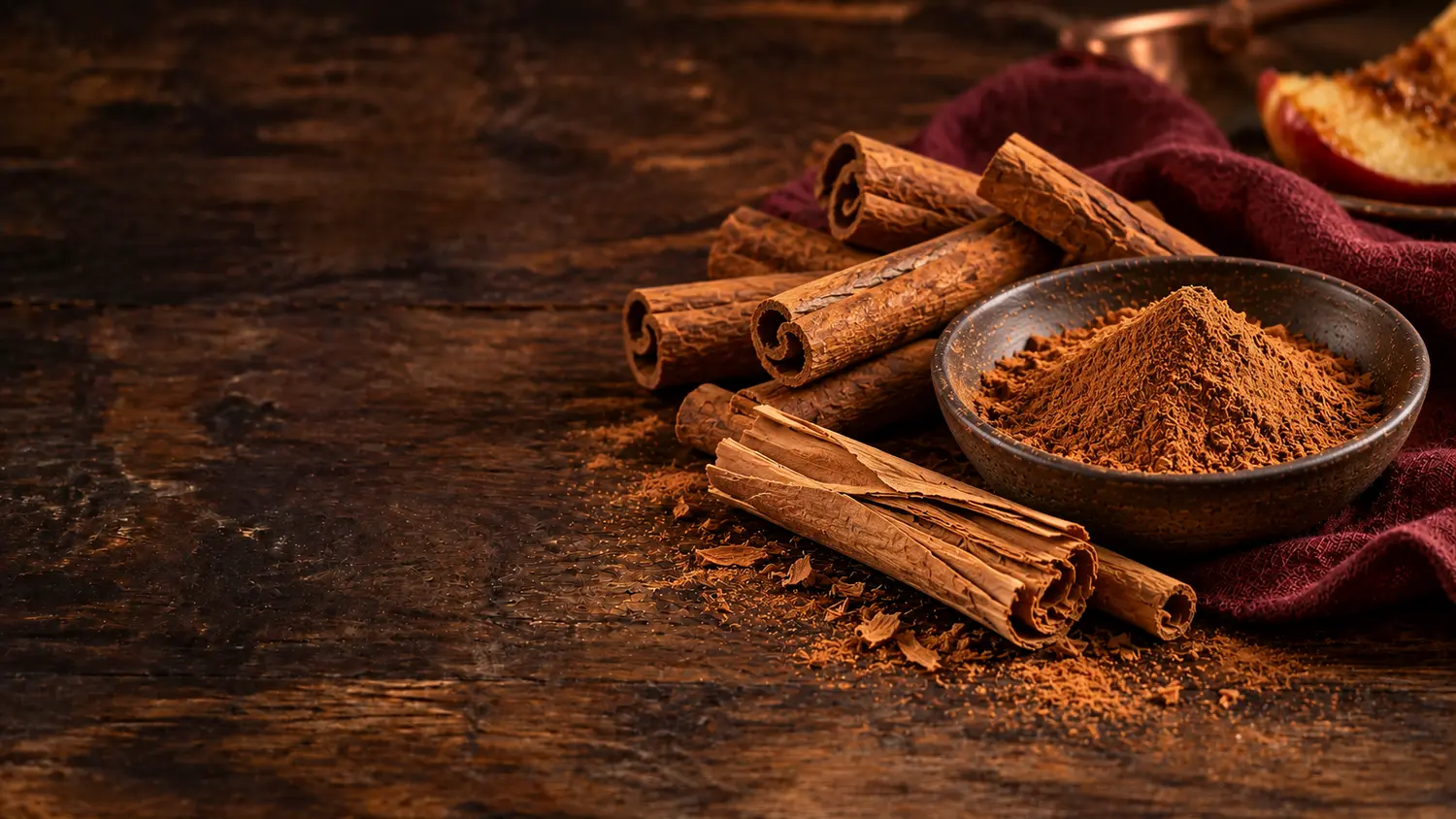
AI-generated illustration.
1055
What is it?
Cinnamon is bark: the fragrant inner bark of cinnamon trees. True Ceylon cinnamon comes from Cinnamomum verum, while close relatives supply other types, including cassia. The bark curls into familiar sticks as it dries. Ground cinnamon is the same ingredient in powder form.
«Bark, but much better than it sounds.»
The story
Cinnamon has been prized for thousands of years. Kew describes its use by ancient Egyptians in embalming and by medieval physicians in their treatments. Today, fortunately, its task is simply to rescue porridge, a bun or a stew.
Flavour profile
Cinnamon smells sweet but also tastes warm, dry and slightly sharp. Ceylon cinnamon is often lighter, gentler and more citrus-like. Cassia is darker, stronger and more direct. Both are cinnamon, but they do not play quite the same role.
Pairs well with
Apples, pears, plums, oat porridge, rice pudding, baking, chocolate, coffee and cocoa. In savoury food, cinnamon works with lamb, tomato, carrot, sweet potato, chickpeas and slow-cooked stews. A little provides warmth without making dinner taste like Christmas.
Use a whole stick for a gentle flavour you can remove later. Ground cinnamon acts more quickly. In stews, the powder can warm briefly in fat with other spices, but do not scorch it. In baking, mix it thoroughly with sugar or flour so nobody gets all of December in one bite.
Did you know?
Ceylon cinnamon originates in Sri Lanka. Cassia cinnamon comes from a different tree whose native range extends from southeastern China to Vietnam. The cinnamon shelf is a family album rather than a solo portrait.
Common mistakes
The most common mistake is thinking more always means cosier. Too much cinnamon makes food dry, bitter and dusty. Another is leaving a whole stick on the plate like an overconfident brown toothpick. Let it infuse, then fish it out.
Know the difference
Ceylon cinnamon has many thin layers of bark tightly rolled together. Cassia is usually thicker and rolled from one coarser piece. As powders, they are almost impossible to distinguish by eye, so check the name on the packet. Cassia is not fake cinnamon; it is another type.
Fun facts
A Ceylon stick can resemble the cross-section of a tightly rolled cigar, while cassia often looks like one thick roll. Those small differences in bark layers tell you more than colour does.
Combines well with
Cardamom, ginger, cloves, nutmeg, vanilla, chilli, cumin, coriander seed, black pepper and orange zest. Choose companions to suit the dish. Cinnamon does not need mulled wine, gingerbread and kebab seasoning on the same shift.
Sapidus best friends
Apple provides acidity and sweetness, butter rounds the flavour and cardamom adds freshness. For savoury food, lamb, tomato and cumin are just as strong a team. Cinnamon likes friends that withstand warmth without disappearing.
What should you avoid?
Cinnamon has no ban list, but a restrained hand helps. The Norwegian Food Safety Authority advises limiting consistently high consumption, particularly of cassia. Ceylon cinnamon contains less coumarin and is a better choice for people who frequently use a lot. Ordinary seasonal spells of gingerbread and cinnamon buns are not what this advice concerns.
Storage
Store cinnamon airtight, dark and dry. Whole sticks usually retain their aroma longer than powder. Smell before pouring: if the jar suggests sawdust rather than cinnamon buns, its work is done. It can retire without a farewell party.
6 claims linked to sources.
Source research was AI-assisted. Explore the background and follow the links to the sources.