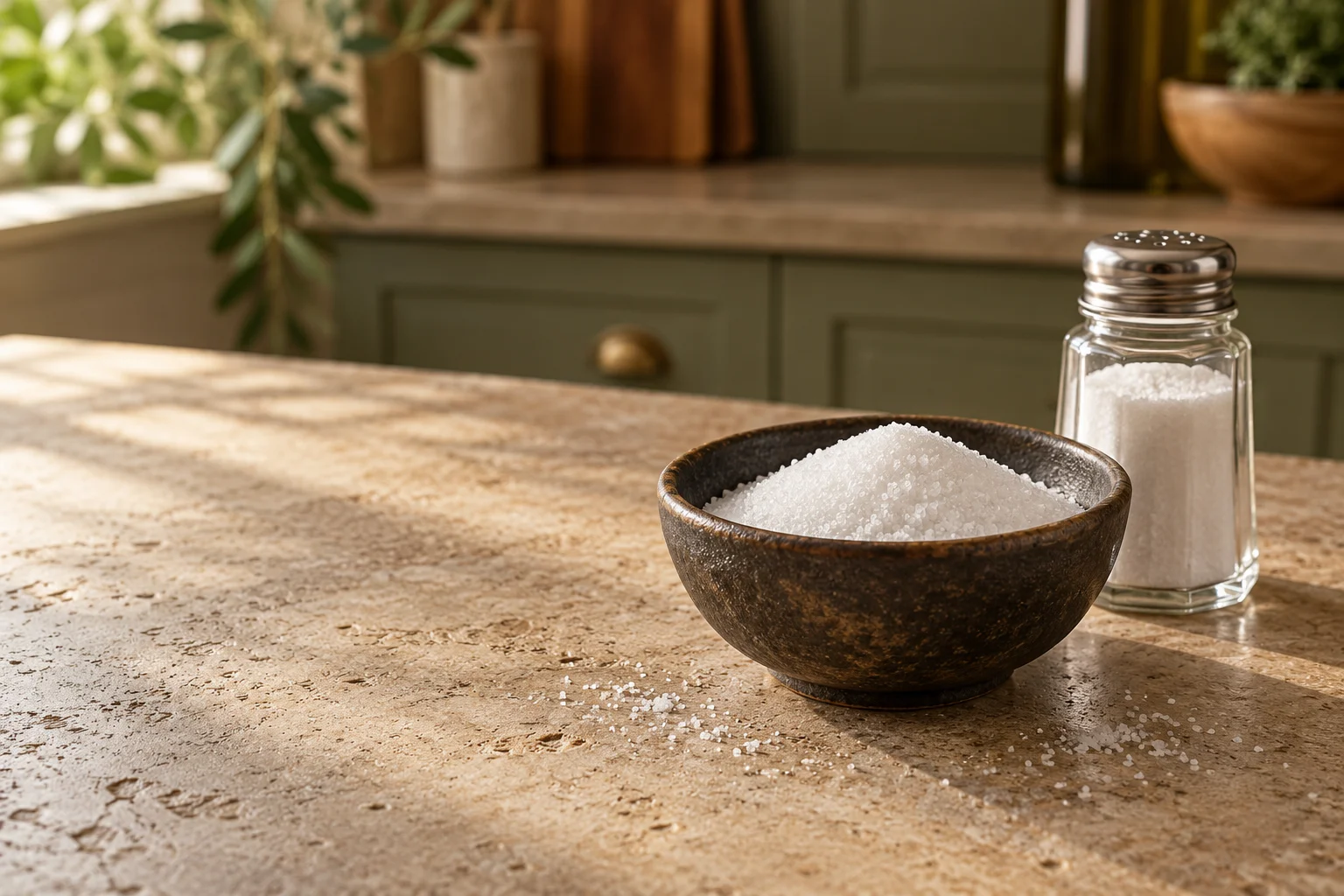
AI-generated illustration.
1064
What is it?
Iodised salt is ordinary food-grade salt with a tiny, carefully measured amount of iodine added. Several authorised forms can be used, including iodide and iodate. The same salt job as before, with a small nutritional bonus.
«The everyday choice with an important detail.»
The story
Iodine in salt is not new in Norway. Iodised salt has been available since 1938, so many remember it from childhood. What changed in 2025 was the quantity: producers were encouraged to increase the level from 5 to 20 micrograms of iodine per gram of table salt and use iodised salt in bread and other non-sweet baked goods.
Flavour profile
Iodised salt is still primarily salt. Grain size and how you use it matter more at the kitchen counter than the word “iodised”. It may be fine, coarse or made from seawater. Iodised describes the addition rather than the shape of the grains.
Pairs well with
Use it wherever you would normally use salt: bread dough, soup, sauce, stews, pasta water and at the table. Fine iodised salt is easy to distribute evenly. For finishing and crunch, choose a coarser variety if the packet actually says iodine has been added.
Turn the packet over and read the ingredients. Iodine, potassium iodide or potassium iodate indicate an iodised everyday salt. Use approximately the same small quantity as usual. Helsenorge puts it simply: limit salt, but choose iodised salt when you do use salt.
Did you know?
Iodine has an important role in the thyroid gland. Its hormones help regulate energy metabolism and are important for normal growth. They also play a central role in brain and nervous-system development in fetuses and young children. Small quantities, a big job.
Common mistakes
The most common mistake is thinking more iodised salt is always better. It is not. Another is assuming sea salt, rock salt or pink salt automatically contains enough iodine. Look for iodine in the ingredients rather than trusting colour, price or a mountain on the label.
Know the difference
“Fine”, “coarse” and “flakes” describe how salt behaves in food. “Sea salt” describes its origin. “Iodised” means iodine has been added. A salt can therefore be fine, sea-derived and iodised at the same time. The ingredients decide, not the front label.
Fun facts
Here is a small calculation with a clear message: salt containing 20 micrograms of iodine per gram would require 7.5 grams of salt on its own to supply the recommended 150 micrograms for adults. That exceeds WHO’s recommendation of under 5 grams of salt daily. Iodised salt is a contribution rather than the whole solution.
Combines well with
Iodised salt works well with pepper, garlic, herbs, lemon, vinegar, chilli and other flavour builders. Let spices and acidity do more work so salt need not shout to be heard.
Sapidus best friends
For iodine, white saltwater fish, milk, yoghurt, Norwegian brown cheese and eggs are good teammates. These are among the foods contributing most iodine in the Norwegian diet. The salt shaker can help but should not play the entire match alone.
What should you avoid?
Be careful when food already contains soy sauce, stock, cured meat, smoked fish, prepared sauces or plenty of cheese. A substantial amount of salt may already be present. Taste first. Add salt afterwards only if needed.
Storage
Keep iodised salt dry, closed and away from heat and direct sunlight, as advised by the Codex standard. Do not place the jar in steam above the pot. Salt prefers a quiet cupboard to a front-row seat beside the cooker.
7 claims linked to sources.
Source research was AI-assisted. Explore the background and follow the links to the sources.