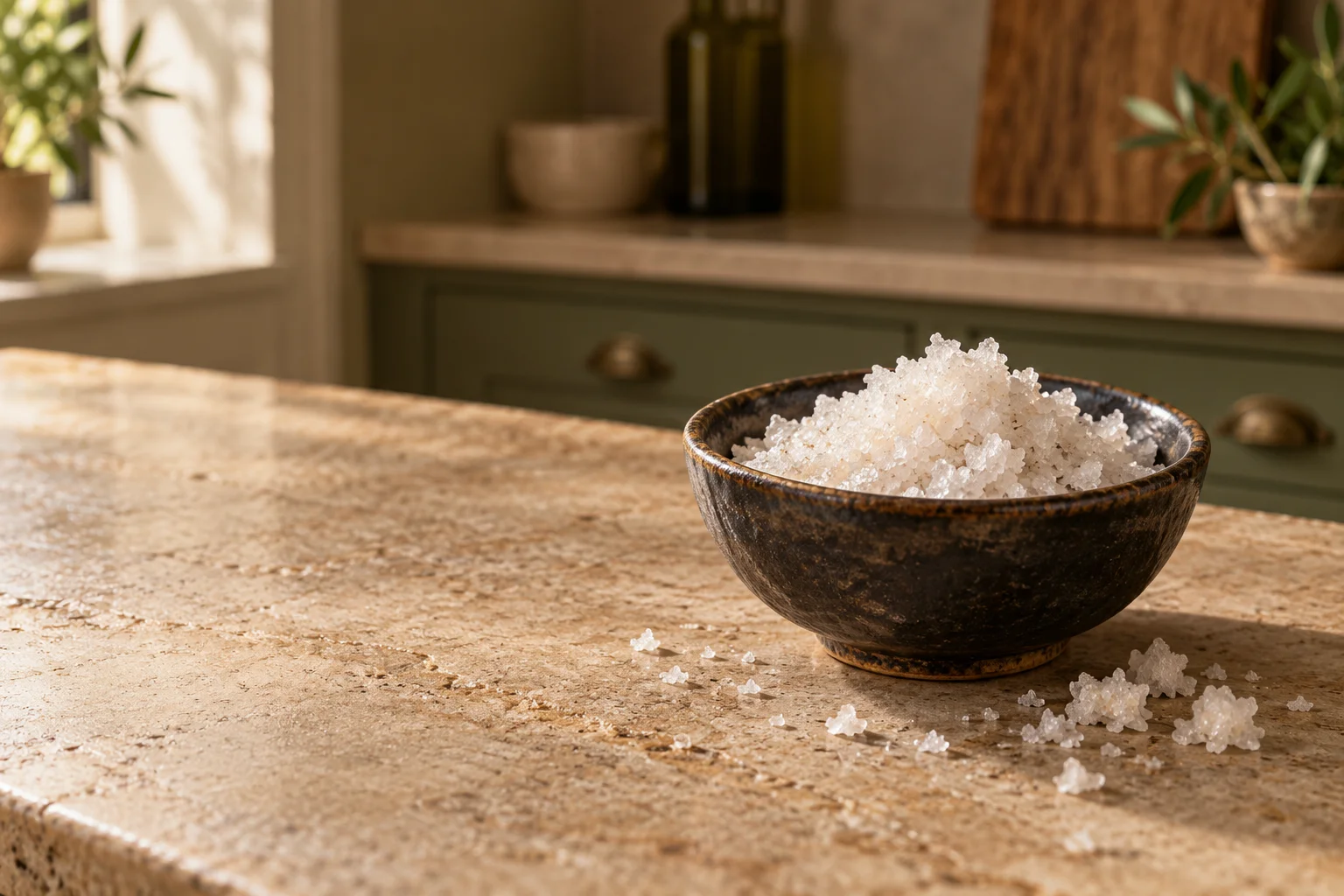
AI-generated illustration.
1066
What is it?
Fleur de sel means “flower of salt”. These are the light, fine, fragile crystals that can form as a thin layer on the brine surface. They are carefully skimmed by hand before sinking. Think cream on top rather than salt on the bottom.
«The delicate top layer.»
The story
Written references to salt works in Guérande date back to 854. The name “fleur de sel” appears in advertising from the 1930s and became common from the late 1970s. An old working method with a rather modern celebrity life.
Flavour profile
The crystals are light and crisp, giving small, quick salty hits before melting on the tongue. Size, shape and dissolution speed can influence how saltiness is perceived. Texture makes the entrance, rather than an entirely new salty flavour.
Pairs well with
Use fleur de sel on finished food: steak, fish, tomatoes, eggs, salads, roast vegetables, focaccia, caramel and dark chocolate. It works best where your fingers can place a few crystals exactly where you want them.
Wait until the food is ready, take a small pinch between your fingers and sprinkle from a little height. You can see where it lands and the crystals keep their crunch. Taste before another pinch. For your other everyday salt, Helsenorge recommends choosing an iodised variety. Fleur de sel should be a final sparkle rather than snowfall over the whole plate.
Did you know?
The weather must cooperate. In Guérande, fleur de sel forms on the surface when sun and wind provide suitable conditions. Crystals must be harvested before sinking; once on the bottom, they are no longer collected as fleur de sel. This salt has a deadline.
Common mistakes
The classic mistake is using expensive fleur de sel in pasta water or a long-simmering stew. The crystals dissolve and the point disappears. Another is assuming airy salt does not count. WHO recommends adults consume less than 5 grams of salt daily. Fine hat, same sodium account.
Know the difference
In Guérande, fleur de sel is harvested from the surface, while grey sea salt forms on the clay bottom of the salt basin. Fleur de sel is lighter and more fragile. Coarse sea salt is heavier and sturdier, better for mills, cooking water and stews.
Fun facts
Fleur de sel de Guérande is unrefined, unwashed after harvesting and free from added substances. That does not make it a mineral supplement. Food-grade salt still consists mainly of sodium chloride. Its special character lies in harvesting, moisture and crystals.
Combines well with
Lemon, butter, olive oil, black pepper, herbs and mild chilli give the fragile crystals room. For sweet dishes, caramel, chocolate, vanilla and nuts are reliable choices. A little salt can lift sweetness; a lot can take over the whole show.
Sapidus best friends
The dream team includes seasonal tomatoes, freshly roasted potatoes, grilled fish, steak, fried eggs, focaccia and caramel. Choose food with a distinct surface so the crystals remain long enough to be seen and felt.
What should you avoid?
Do not use it as your only salt in large soups, stews, cooking water or doughs where everything must dissolve. Be careful on cured meats, smoked fish, olives and salty cheeses too. They have already taken care of the salt.
Storage
Store fleur de sel closed and dry, but do not worry if it feels slightly moist: this is natural for many varieties. Use a clean, dry spoon or fingers. Steam above a pot can turn delicate crystals into one large salt flower.
7 claims linked to sources.
Source research was AI-assisted. Explore the background and follow the links to the sources.