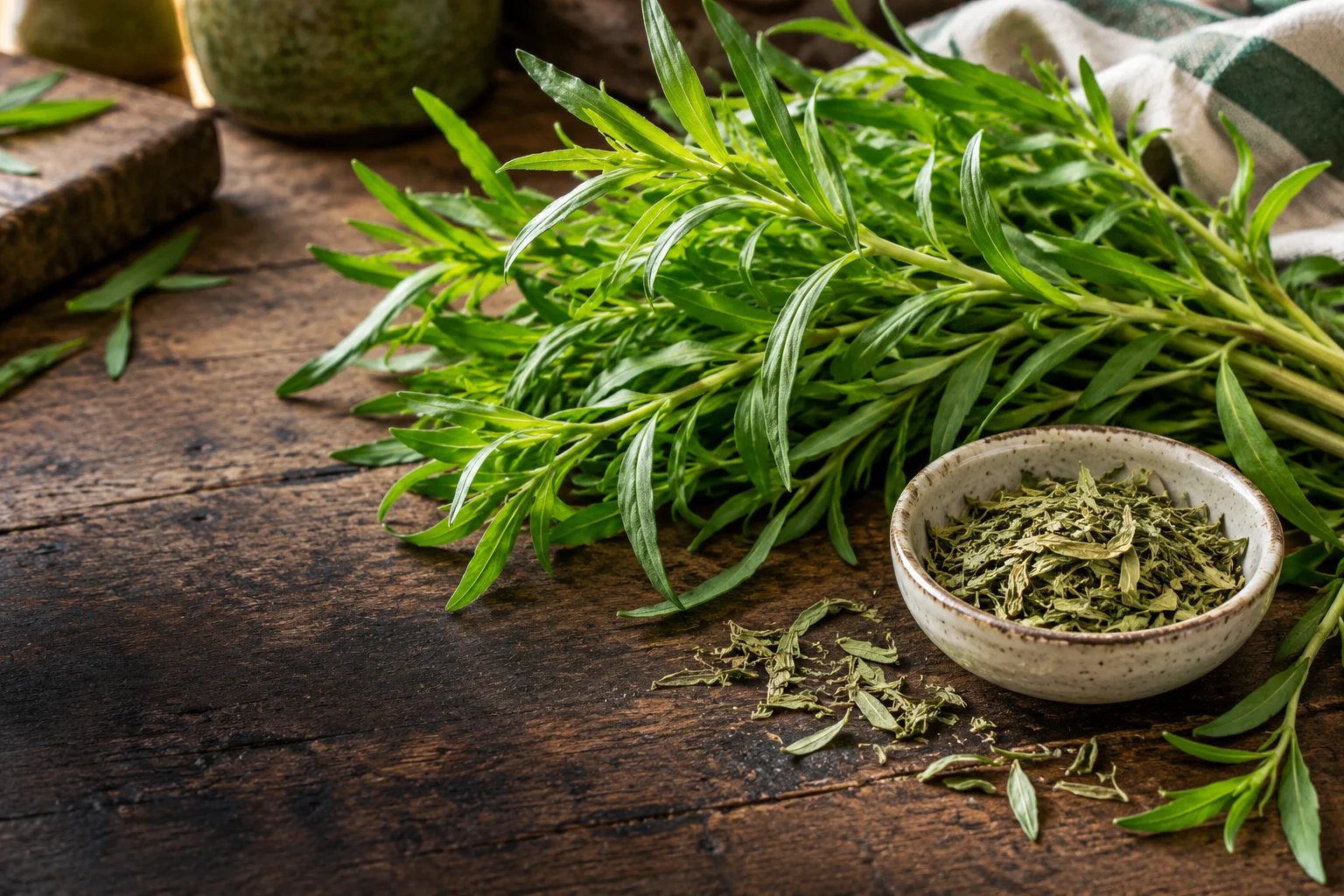
AI-generated illustration.
1030
What is it?
Tarragon is a perennial herb, Artemisia dracunculus. French and Russian tarragon are two common kitchen types with different growth habits and flavours. The leaves are used fresh or dried. We use French tarragon as our reference when seeking the distinctive flavour familiar from béarnaise.
«Tarragon has a pronounced aniseed and liquorice character.»
Background
French tarragon is usually propagated by division or cuttings. Russian tarragon can be grown from seed. This is useful when buying a plant: the name tarragon alone does not tell you everything about its flavour.
Flavour profile
Tarragon has a pronounced aniseed and liquorice character. It can seem green, slightly sweet and faintly bitter. Small amounts give a mild sauce personality; large amounts can make everything else disappear behind the herb.
Pairs well with
Chicken, eggs, white fish, mushrooms, potatoes, green beans, mustard dressings and creamy sauces. For fish soup, we would test a little in one ladleful first, so the whole pot does not become an experiment you have to finish.
Stir in a little finely chopped fresh tarragon near the end and taste before adding more. In a cold dressing, allow time for the flavour to spread. Dried tarragon can spend some time in the sauce. Treat this as kitchen advice, not a fixed rule for every dish.
Did you know?
According to the RHS, French tarragon usually does not produce viable seed in British growing conditions. A seed packet and a plant grown from a cutting may therefore lead to different expectations in the kitchen. Check which type you are buying.
Common mistakes
Using a large handful as though it were parsley. Adding lots of dried tarragon without smelling it first. Or using the herb to repair a sauce that really needs salt or acidity. Tarragon does not solve every sauce problem.
Know the difference
French tarragon is often preferred for cooking because of its distinctive aroma. Russian tarragon grows more vigorously and has a different, often weaker or coarser flavour. Taste a leaf before using the same amount as last time.
A little spice knowledge
Tarragon does not have to accompany steak and béarnaise. A producer also suggests combining it with vinegar, olive oil and Dijon mustard in a dressing. This is a simple way to get to know the herb without making a hot sauce.
Works well with
Parsley, chives, chervil, black pepper, lemon and Dijon mustard. Start with gentle companions. Large amounts of rosemary, oregano and tarragon together can make it difficult to identify the direction you wanted.
Sapidus’ favourite partners
Chicken, mustard and a little acidity. Try finely chopped tarragon in a simple dressing of yoghurt, Dijon mustard and a few drops of lemon. Taste in a small bowl before making a large batch.
Never combine with?
There is no absolute forbidden list. But the aniseed character can dominate mild dishes and does not automatically suit every fish soup. With a new combination, take a little food aside, test the herb there and decide before seasoning the whole pot.
Storage
Keep fresh tarragon in the refrigerator and use while the leaves are in good condition and smell aromatic. Store dried tarragon tightly closed, dark and dry. Fresh and dried taste different, so a conversion ratio is only a starting point: smell and taste decide.
Try it yourself
Make a mild yoghurt dressing and divide it between three small bowls. Leave one plain, add a little fresh tarragon to the second and a little dried to the third. Leave for a few minutes and compare. This is an invitation to your own tasting exercise.
5 claims linked to sources.
Source research was AI-assisted. Explore the background and follow the links to the sources.