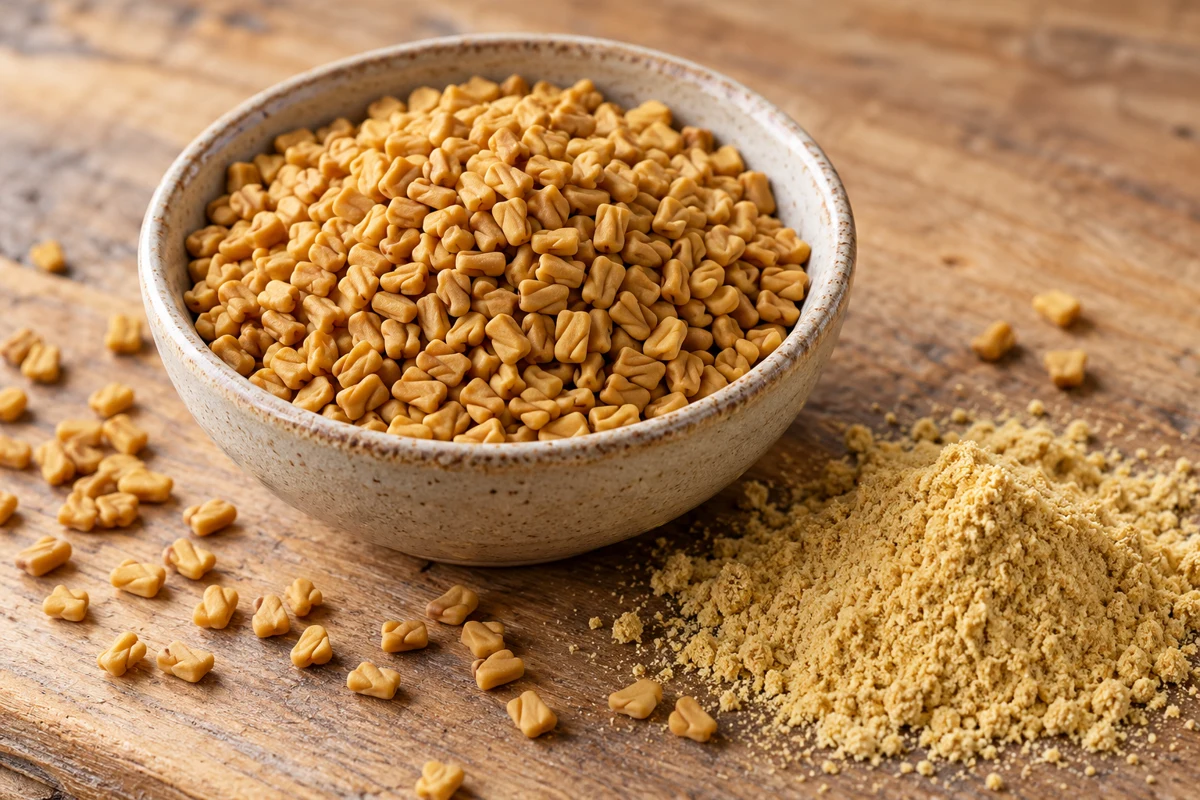
Fenugreek
Powerful, warm and bitter, with a distinctive sweet-smelling aromatic impression. Use small amounts.
AI-generated illustration.
1048
What is it?
Fenugreek is Trigonella foenum-graecum. Both seeds and leaves are used as seasonings. Here we begin with the seeds.
«Powerful, warm and bitter, with a distinctive sweet-smelling aromatic impression. Use small amounts.»
Background
Here we begin with seeds. Dried leaves are a separate kitchen ingredient and should not receive the same quantity out of habit.
Flavour profile
Powerful, warm and bitter, with a distinctive sweet-smelling aromatic impression. Use small amounts.
Pairs well with
Curry blends, lentils, vegetables and some sauces.
Crush or grind the seeds for even distribution. Try a small amount in a sample portion before seasoning the whole pot.
Did you know?
Kew describes both the leaves and seeds being used as seasonings. The plant part therefore matters when writing recipes.
Common mistakes
Too much spice or burnt spice can make a dish bitter and difficult to balance.
Know the difference
The seeds and dried leaves, often called kasuri methi, have different roles. Follow the recipe's choice of plant part.
A little spice knowledge
For a small blend, accurate scales are more useful than trying to divide a large spoonful by eye.
Works well with
Coriander seeds, cumin, turmeric and ginger.
Sapidus’ favourite partners
Try a small pinch in a portion of lentils with onion and tomato, and note the amount.
Never combine with?
Strong bitterness does not automatically improve with longer cooking. Add cautiously until you know how the ingredient behaves.
Storage
Store tightly closed, dark and dry, away from cooker steam. Smell before use and buy an amount suited to your consumption. Follow the packaging advice for fresh or processed products.
Try it yourself
Divide a mild lentil base in two and compare a small pinch of fenugreek with none. This suggestion is not presented as a test carried out by Sapidus.
1 claims linked to sources.
Source research was AI-assisted. Explore the background and follow the links to the sources.