Good flavour often begins with the onion.
A good soup, sauce or stew often starts with a few quiet minutes in the pan. Browning is not always the goal. Learn to choose both the onion and its treatment to suit the food you are making.
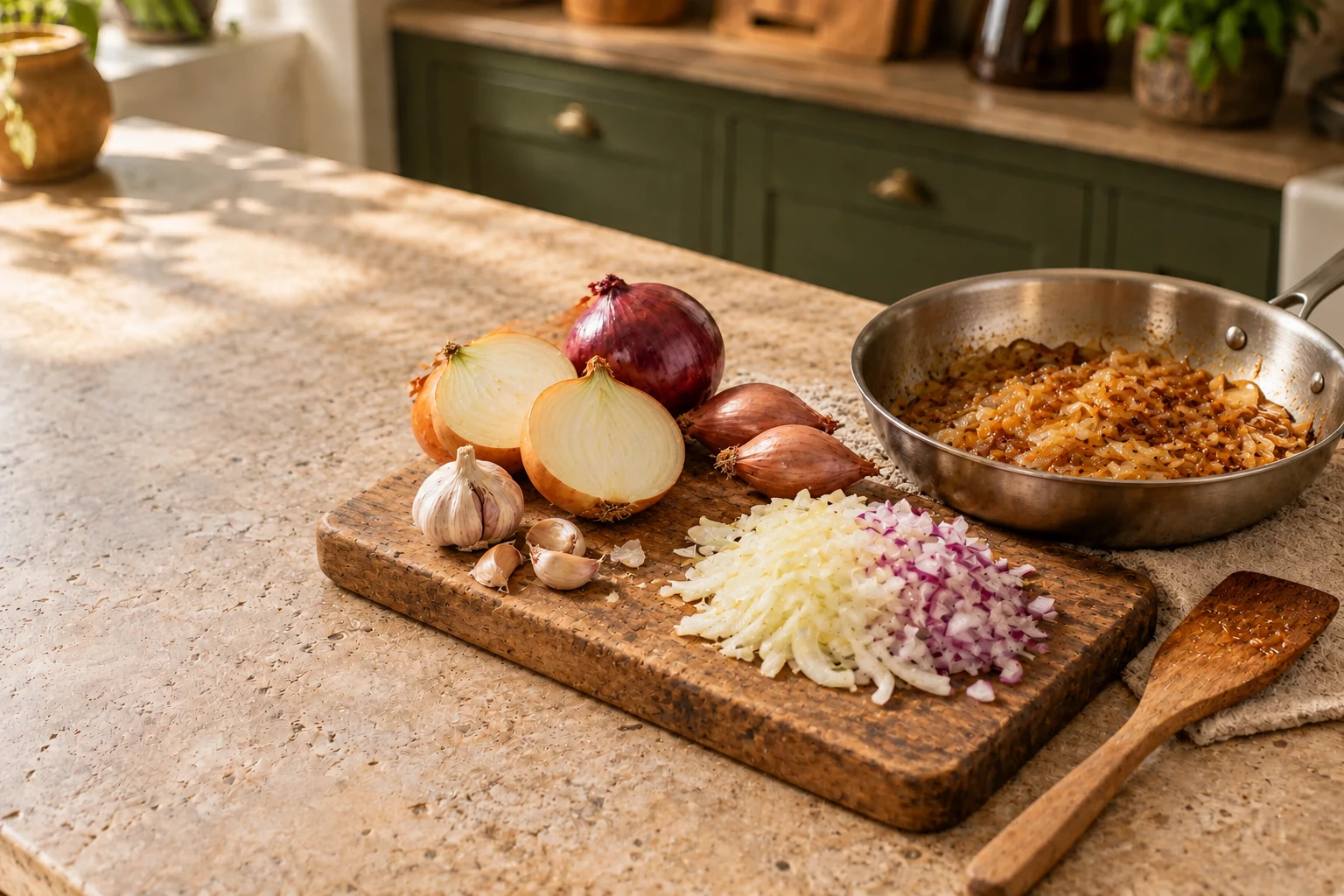
AI-generated illustration.
You do not need a different onion for every recipe.
Yellow onion is our versatile starting point for stews, soups and ragù. Raw onion can be sharp; heat produces a milder, sweeter impression. Shallots have a more aromatic, milder character and work well when the onion should be discreet.
| Onion or garlic | Flavour | A good starting point | What to do |
|---|---|---|---|
| Yellow onion | Pronounced when raw, rounder and sweeter after cooking | Soup, ragù and meat stews | Finely chop for a base, or slice for a cooked side dish. |
| Shallot | Aromatic and often milder than yellow onion | Fish soup, pan sauces and delicate sauces | Finely chop and soften without darkening when making a light sauce. |
| Red onion | Fresh onion flavour and strong colour; pungency varies | Salad, salsa, pickling and cooked sides | Slice thinly for raw use. Taste a piece before deciding how much to add. |
| White onion | Fresh and crisp; can be sharp when raw | Salsa, salads and quick pan dishes | Finely chop for salsa or slice thinly; this is an onion, not garlic. |
| Leek | Gentle onion flavour, especially after cooking | Fish soup, Norwegian stew and vegetable soup | Split lengthways and rinse between the layers. Use tender dark-green parts, or save them for stock. |
| Spring onion / scallion | Fresh, green and gently onion-like | Stir-fries, noodles, salads and toppings | Briefly cook the white part; add green tops at the end or use raw. |
| Chives | Delicate, mild onion aroma | Eggs, mashed potatoes, fish and cold sauces | Snip finely and add when serving. Long cooking makes the flavour less prominent. |
| Garlic | Sharp when raw, milder and sweeter when roasted | Stews, pasta, marinades and dressings | Choose whole cloves, slices or finely chopped garlic for the intensity you want. Avoid burning it. |
| Black garlic | Soft, sweet-sour and deep, often recalling dried fruit and balsamic vinegar | Dark sauces, mushrooms, mashed potatoes and dressings | Mash to a paste and stir in near the end. Treat it as its own flavour, not a direct substitute for raw garlic. |
These are applications, not absolute rules. A good yellow onion is better than abandoning dinner because you have no shallots.
Softened, browned and caramelised are different goals.
Sweating: soft without colour
Use medium-low heat and a little oil. Stir occasionally and let the onion become soft and translucent without dark edges. For a finely chopped soup base, 8–15 minutes is a practical starting point, but watch the onion. We use this in tomato soup and soffritto.
Browning: a pronounced fried flavour
Use a wide pan and slightly higher heat. Let the onion contact the base between turns. Aim for golden-brown surfaces and a soft interior, not black, dry edges. Suitable for side dishes and darker stew bases.
Caramelising: soft and deeply golden
Cook slices gently over low to medium-low heat. Allow 30–60 minutes or more, depending on quantity and the colour you want. Stir regularly and reduce the heat if it darkens before softening. Five minutes in a hot pan gives a different result.
Flavour rather than extra sugar
Onions have their own sweetness. We do not automatically add sugar to speed things up. A little water can loosen browned flavour from the base as the onions continue to soften; let that water evaporate again.
Garlic: cutting and heat change the flavour.
Cutting or crushing a clove brings together compounds and enzymes previously separated within its cells. Allicin is among the compounds formed and contributes to the characteristic sharp garlic aroma. Heat changes this chemistry. Raw crushed garlic and a soft roasted clove therefore produce very different experiences.
| Preparation | Flavour and use | How to succeed |
|---|---|---|
| Raw, grated or pressed | Pronounced and penetrating in dressings, aioli and cold sauces. | Start with a little, mix well and taste again after the sauce has stood for a while. |
| Finely chopped and sautéed | Warm, integrated garlic flavour in soup, pasta and stews. | Soften the onion almost completely first. Briefly cook the garlic, often ½–2 minutes, with the liquid ready. |
| Thinly sliced | Distinct little bursts in pasta, vegetables and toppings. | Use moderate heat and watch closely. Remove while pale golden; the slices darken quickly. |
| Whole roasted cloves | Soft and mild, good in mash, sauces or on bread. | Roast until the cloves yield to gentle pressure. Mash into the dish and adjust to taste. |
| Dried powder or granules | Even distribution in spice blends, rubs and sauces. | Powder, granules and fresh cloves differ in strength and texture. Use the form specified and taste when substituting. |
Size varies greatly. Choose both amount and preparation: adding more raw garlic does not give the same result as adding more roasted garlic.
Remove the green germ if it tastes harsh or bitter
Split the peeled clove lengthways and lift out the central shoot with the tip of a small knife. In older garlic, a developed green germ can taste harsh or bitter, especially in raw dressings and aioli. Removing it may give a gentler result; a small, pale centre in fresh garlic does not automatically need removing. This does not prevent bitterness from burnt garlic: keep the heat under control as well.
Black garlic: sweet-sour depth in small amounts.
Black garlic is ordinary garlic aged for a long time under controlled heat and humidity. It is a processed product, not a separate black variety or burnt garlic. Maillard reactions are important in the darkening. Although often called fermented garlic, the process primarily relies on heat treatment rather than traditional microbial fermentation.
The cloves are dark, soft and easy to mash. The flavour is less raw and pungent, with sweetness, acidity and deep aromas that may recall dried fruit or balsamic vinegar. It gives a different balance from fresh garlic: try small amounts before replacing several cloves in a recipe.
In sauces for meat and mushrooms
A practical trial amount is one small clove per 200–300 ml of finished sauce. Mash with a little warm sauce, stir back in and taste before adding more. Add near the end to keep control of the flavour.
In mash or with fried mushrooms
Make a smooth paste first. Fold a little into finished mashed potatoes, or mix with mushrooms after browning. Reassess salt and acidity afterwards; the sweet-sour flavour is part of the addition.
In a cold dressing
Mash a small clove with a little yoghurt or crème fraîche before mixing with the rest. Season with lemon and salt. This is a suggestion to try, not a home-tested Sapidus recipe.
Uses and starting amounts are our kitchen suggestions. Product size and flavour vary. Follow the package storage instructions, especially after opening.
Substitute by function, not just by name.
Yellow onions, red onions and shallots can often replace each other in a cooked flavour base. Colour, strength and size vary, so consider the amount rather than swapping one large yellow onion for one tiny shallot. Red onion may add unwanted colour to a light sauce.
Leeks and spring onions give a greener, gentler character. Chives work best as a finish and do not replace the bulk or sweetness of a slowly cooked onion base. Garlic and black garlic are separate flavour elements; neither replaces yellow onion one for one.
A simple sequence for the pot.
Onions and firm vegetables first
Soften onion, carrot and celery in oil. For ragù, finely chop with a knife or short food-processor pulses without making a purée.
Garlic towards the end
Stir it in when the vegetables are almost ready. Watch the aroma and colour.
Paste or spices as the recipe directs
Tomato paste can have a couple of minutes in the fat. Ground spices often need less time. Adjust the heat so nothing scorches.
Then add the liquid
Stock, tomatoes or coconut milk stop the dry frying and start the next stage. Liquid will not finish browning a raw onion base afterwards.
When onions will not cooperate.
Black outside, raw inside
Lower the heat and allow more time. Even pieces make success easier. Remove blackened parts; more stock rarely hides them well.
Watery and pale
There may be too much onion in a small pan. Pale colour is right for sweated onions. For browned onions, the liquid needs to evaporate and the onions need room to contact the pan.
Bitter garlic
Start the small garlic base again if it is burnt. Next time: lower heat, later addition and the liquid ready beside you.
Knife or food processor?
Both work. Short pulses save time, while a knife gives more control over even dice. A lot of purée releases more liquid and needs a different approach in the pan.
Sources and further reading
Source research is AI-assisted. Kitchen examples, proposed tests and troubleshooting are Sapidus’ practical applications of the source material.
- FRUKT.no – yellow onion ↗
- FRUKT.no – shallots ↗
- FRUKT.no – common garlic ↗
- MatPrat – onions cooked slowly over gentle heat ↗
- MatPrat – avoiding overly dark garlic ↗
- FRUKT.no – spring onions ↗
- Oregon State University – garlic chemistry ↗
- Food science review (2019) – black garlic: processing and sensory properties ↗
- Food science review (2023) – black garlic aroma ↗
- David Lebovitz – taste test with and without the garlic germ ↗